
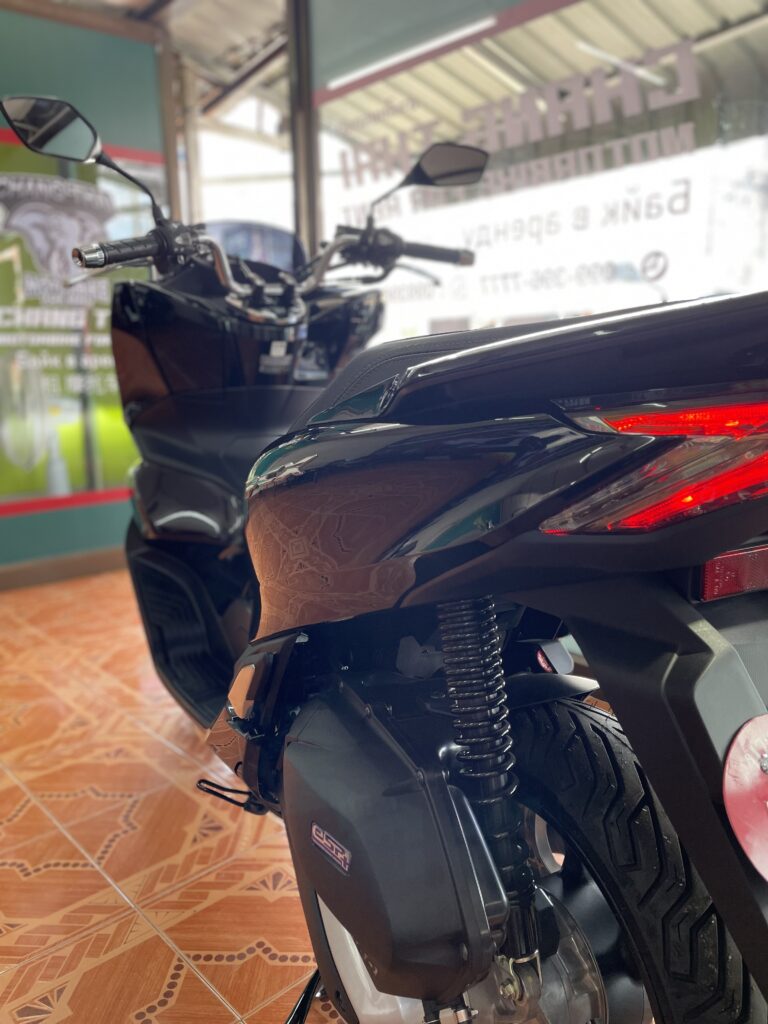
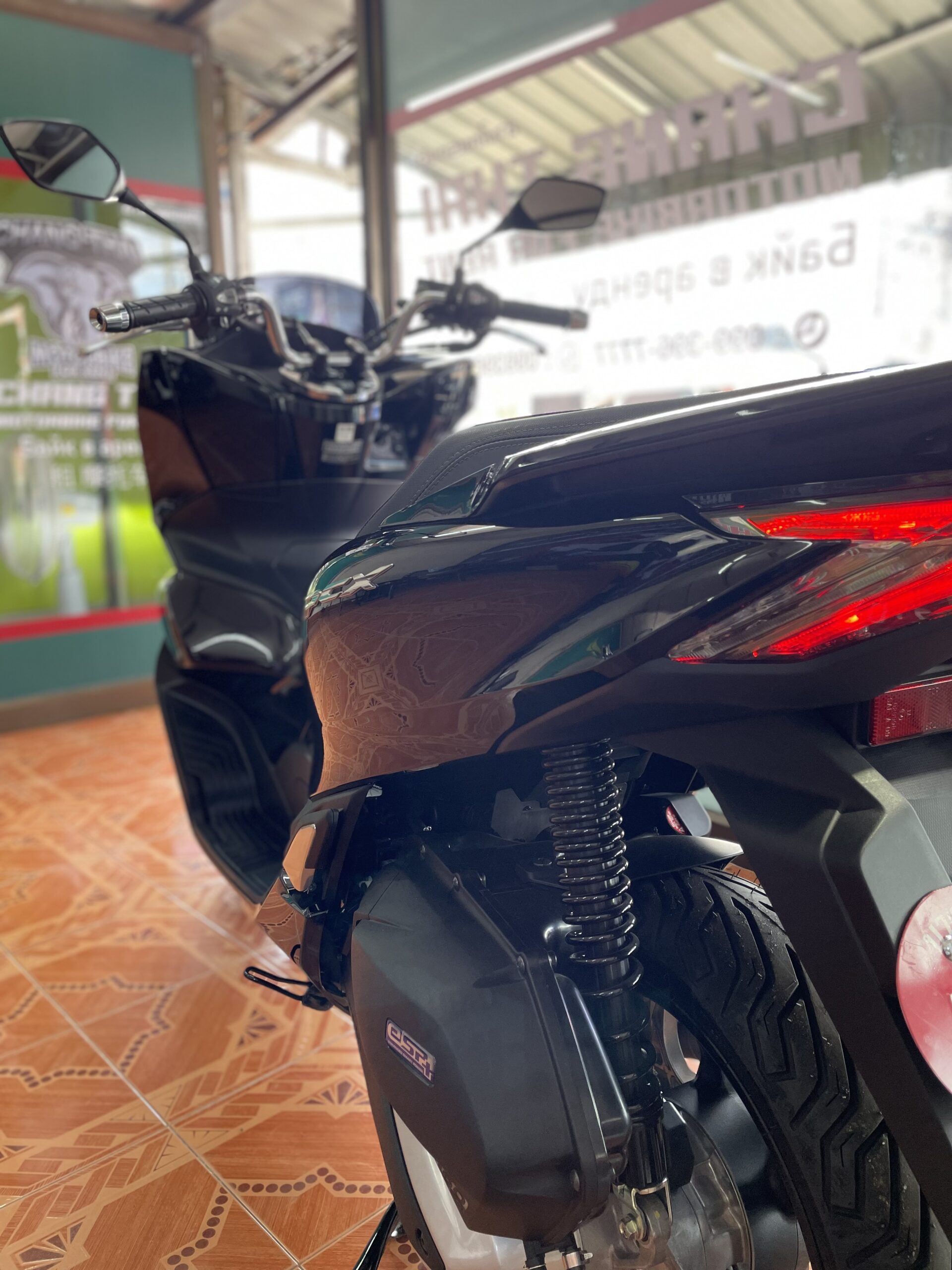
Quick answer: Warm the engine for a few minutes, drain the old oil through the bolt on the underside of the crankcase, refill with Honda's specified 0.8 litres of fresh SAE 10W-30, JASO T903 MB oil, and confirm the level using the built-in dipstick on the oil filler cap — reinserted without screwing it in, per Honda's own procedure. The job takes about 20 minutes and needs only a wrench, a drain pan, and a funnel. If you'd rather not get your hands dirty, routine maintenance like this is normally handled for you on a rented scooter — more on that further down.
Honda PCX160 Oil Facts at a Glance
These figures are taken directly from Honda's own PCX160 owner's manual, not from generic scooter-maintenance guides — several numbers commonly repeated online for this bike (a different oil grade, a different capacity) don't match what Honda actually specifies, so it's worth using the manual's own figures rather than an average of what's floating around the web.
- Oil type: SAE 10W-30, API SG or higher, JASO T903 MB standard — Honda specifically excludes oils carrying an "Energy Conserving" label on the API circle
- Capacity: 0.8 litres after a normal drain (Honda's manual lists 0.9 litres only for a full engine disassembly, which isn't part of a routine oil change)
- Oil level check: via the dipstick built into the oil filler cap — not a sight glass or inspection window
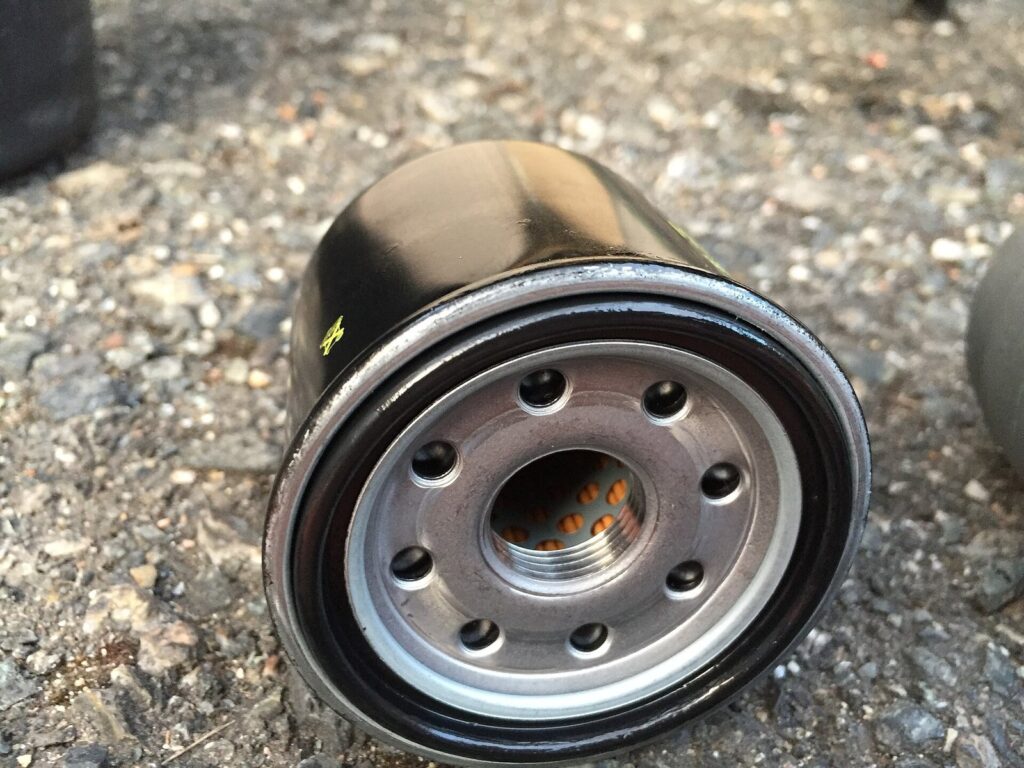
- Oil strainer: a reusable mesh screen behind a cap on the crankcase, cleaned and reinspected rather than replaced like a car's cartridge filter
- Change interval: follow the table in your owner's manual (or the service-due sticker most shops leave after a change) — Honda's manual itself notes oil should be changed more often than the standard schedule "when running in very dusty conditions," which describes a lot of riding in Phuket
Why This Matters More in Phuket Than the Manual Assumes
Honda's maintenance schedule is written as a general baseline, and the manual itself flags that dusty conditions call for shorter intervals than the standard table. Phuket qualifies on more than one count: constant construction dust and unpaved shortcuts, low-speed stop-start traffic that keeps the engine working harder relative to distance covered, and ambient heat that rarely drops far below 30°C even outside the hottest months. None of that changes the oil grade or capacity Honda specifies, but it's a legitimate reason to service on the shorter end of whatever interval your manual lists rather than stretching it to the maximum.
Riders who keep a PCX160 long-term on the island — rather than renting one with maintenance included — are the ones who benefit most from knowing how to check and change the oil themselves. It's inexpensive, it takes about twenty minutes, and it's one of the few maintenance jobs that doesn't require specialist tools.
Why the Oil Grade Matters: MB, Not MA
Honda's manual specifies JASO T903 MB, not MA or MA2. The distinction exists because of how a scooter's CVT transmission is built: the belt and pulley system runs in its own sealed, dry compartment, separate from the engine oil. JASO MB-rated oils are formulated with friction modifiers that reduce internal drag and improve efficiency — something that would cause clutch slip on a geared motorcycle with a wet, oil-bathed clutch, but which doesn't apply to a PCX160's transmission layout. Using an MA or MA2-rated oil generally won't damage the engine, but it isn't what Honda specifies, and it works against the fuel-efficiency behaviour the MB formulation is designed for. The bigger risk Honda's manual actually calls out by name is oils labelled "Energy Conserving" on the API service circle — those use friction modifiers aimed at a different problem and are explicitly excluded, regardless of JASO rating.
What You'll Need
Gather everything first so you're not hunting for a wrench with the drain bolt already loose and oil dripping:
- Fresh engine oil — SAE 10W-30, JASO T903 MB, API SG or higher, at least 1 litre so you have a margin
- A socket or box wrench sized to your drain bolt — confirm the size against your own toolkit or bike before you start, since it's easy to grab the wrong size guessing from an online guide
- Drain pan large enough to sit fully under the crankcase
- Funnel — a narrow spout makes it much easier to hit the fill hole without spilling
- A new sealing rubber and O-ring for the oil strainer cap, if yours looks worn — only needed on a strainer-service interval, not every oil change
- Nitrile gloves and a rag — used oil is a skin irritant with prolonged contact
Before You Start: Safety and Prep
- Park on level, firm ground — a sloped or soft surface makes draining messier and throws off the dipstick reading afterward
- Put the scooter on its centre stand, on level ground, as Honda's own procedure specifies
- Warm, not scalding — don't work on an engine that's just been ridden hard; give it a few minutes to cool from riding temperature first
- Keep the drain pan positioned before you touch the bolt, not after oil starts flowing
- Never dispose of used oil in a drain, on the ground, or in household trash — see the disposal note at the end of the steps
Step-by-Step: How to Change the Engine Oil
How to change the engine oil on a Honda PCX160, following Honda's own owner's manual procedure from warming the engine to checking the level with the dipstick.
Total Time: 20 minutes
Warm up the engine
Start the PCX160 and let it idle for a few minutes, or take it for a short ride. Warm oil flows faster and carries more contaminants out with it than cold oil, which clings to the crankcase walls and leaves residue behind.
Position the scooter and place the drain pan
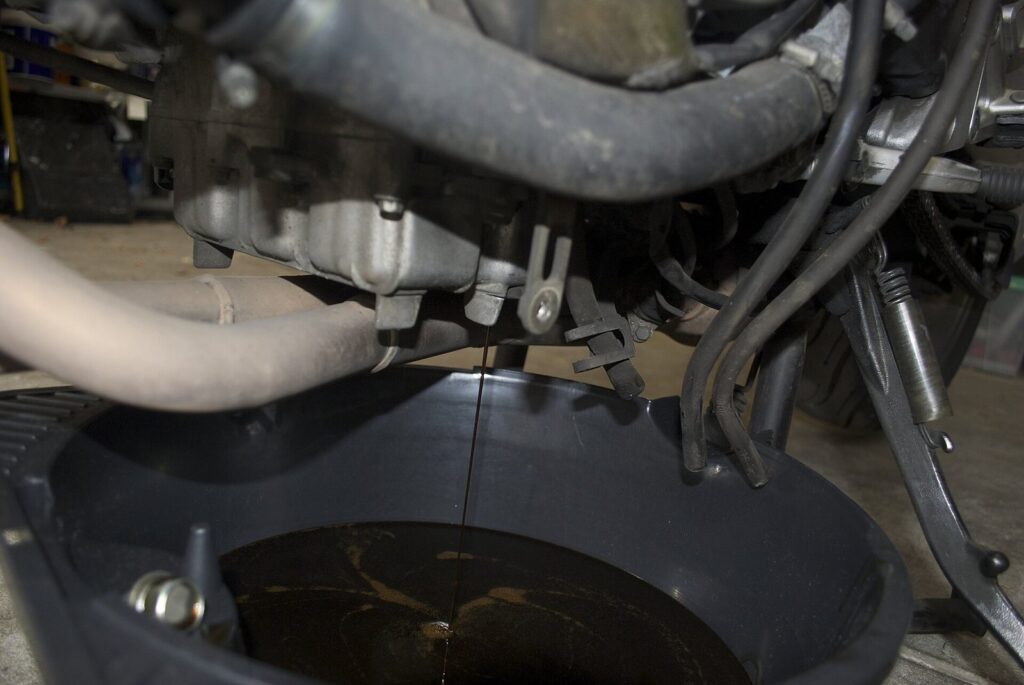
Switch off the engine, put the PCX160 on its centre stand on level ground, and slide the drain pan under the crankcase before you touch anything. Locate the drain bolt on the underside of the engine.
Loosen and remove the drain bolt
Using a properly sized socket or wrench, turn the drain bolt counter-clockwise. Once it's loose, finish removing it by hand and pull it away quickly — oil will start flowing as soon as the bolt clears the threads. Let it drain fully; this usually takes a couple of minutes and slows to a drip near the end.
Reinstall the drain bolt
Thread the bolt back in by hand first to avoid cross-threading the aluminium crankcase, then snug it with a wrench — hand-tight plus a firm quarter-turn is safer than leaning on a long wrench, since stripped crankcase threads are a far more expensive repair than a slightly under-torqued bolt. If you have a torque wrench, check your owner's manual's torque chart for the exact figure for your model year.
Clean the oil strainer screen (if it's a strainer-service interval)
With the oil drained, remove the oil strainer screen cap; the spring and strainer screen will come out with it. Clean the screen, and check that the screen, sealing rubber and O-ring are all in good condition before reinstalling — replace the rubber and O-ring if they look worn. This isn't a step every oil change; check your maintenance schedule for the interval. The PCX160 doesn't use a disposable cartridge filter the way a car does, so there's no filter to buy for this step.
Refill with fresh oil
Remove the oil filler cap/dipstick near the top of the engine and insert the funnel. Pour in fresh SAE 10W-30, JASO MB oil gradually — Honda's manual lists 0.8 litres after a normal drain, but add it a little at a time and finish by checking the dipstick rather than assuming the full amount is exactly right for your bike.
Check the level with the dipstick
Let the scooter sit for two to three minutes on its centre stand on level ground. Remove the oil filler cap/dipstick, wipe it clean, then reinsert it until it seats — without screwing it in. Pull it back out and read the level: it should sit between the upper and lower marks. Screwing the dipstick in before checking will give a false reading. Add oil in small amounts and recheck if it's below the lower mark; don't overfill past the upper mark.
Start the engine and check for leaks
Start the engine and let it idle for a minute or two. Check around the drain bolt and, if you serviced it, the strainer screen cap for any weeping or dripping. Switch off, wait a minute for the oil to settle, and recheck the dipstick level one more time before you consider the job done.
Dispose of the old oil responsibly
Pour the used oil from the drain pan into a sealed container — an empty oil bottle works well. Most motorbike shops, garages, and oil retailers in Phuket will accept used oil for recycling. Never tip it into a drain, storm gutter, or onto the ground; used motor oil is a serious groundwater contaminant.
Just Checking the Oil Level? Here's the Quick Way
Not every visit to the garage needs a full oil change. Honda's manual recommends checking the engine oil level each day before riding, and it takes under a minute:
- Park on level ground, on the centre stand. If the scooter has just been ridden, let it sit for two to three minutes so oil clinging to the upper engine has time to drain back down.
- Remove the oil filler cap/dipstick near the top of the engine and wipe it clean with a rag.
- Reinsert the cap/dipstick until it seats, but don't screw it in — screwing it in gives a false, higher reading.
- Pull it back out and read the level against the upper and lower marks.
- If it's below the lower mark, top up in small amounts through the filler hole, rechecking after each addition rather than guessing a quantity. Don't fill past the upper mark.
If the oil looks black and gritty rather than a normal honey-brown, or the level drops noticeably between checks with no visible leak underneath the bike, that's worth a mechanic's look rather than just topping it up and moving on.
Common Mistakes That Damage a PCX160 Engine
- Overtightening the drain bolt. The crankcase threads are aluminium and the bolt is steel — cranking it down "to be sure" strips the threads long before the bolt itself gives way, turning a routine service into a much bigger repair.
- Screwing the dipstick in to check the level. Honda's own procedure is explicit about this: insert it until it seats, don't screw it in, or the reading will be wrong.
- Assuming a fixed pour is exact. Honda's 0.8-litre figure is a solid starting point, but the dipstick reading is what actually reflects your engine — always finish by checking it rather than trusting the number alone.
- Changing oil cold. Cold oil is thicker and drains slowly, leaving more old, contaminated oil behind in the crankcase than a proper warm drain.
- Using automotive oil, or motorcycle oil labelled "Energy Conserving." Honda's manual explicitly excludes Energy Conserving-labelled oils regardless of JASO rating — they're formulated for a different kind of engine and aren't what the PCX160 needs.
- Ignoring dusty-condition servicing. Honda's own manual calls out more frequent oil changes when riding in dusty conditions — a description that fits a lot of everyday riding in Phuket.
DIY vs Letting a Rental Company Handle It
This guide is written for PCX160 owners and long-term riders who want to maintain their own scooter — it's genuinely one of the easier jobs on the bike once you've done it once. If you're renting rather than owning, routine maintenance including oil changes is normally the rental company's responsibility as part of the rental agreement, not something you need to do yourself.
Chang Thai Rentals runs a fleet of Honda PCX160 scooters for rent in Phuket, with maintenance handled as part of the rental. If you're keeping a bike on the island for a season or longer, our monthly motorbike rental plans are worth comparing against the cost and time of owning and servicing a bike yourself. And if you need a scooter delivered to compare in person, check our motorbike delivery service across the island.
Frequently Asked Questions
How much oil does a Honda PCX160 take?
Honda's owner's manual lists 0.8 litres after a normal drain (0.9 litres only applies after a full engine disassembly, which isn't part of a routine change). Add it gradually and confirm the final level with the dipstick rather than assuming the full amount is exactly right.
What type of oil does a Honda PCX160 need?
SAE 10W-30, API SG or higher, JASO T903 MB standard — confirmed directly in Honda's owner's manual. Honda explicitly excludes oils labelled "Energy Conserving" on the API circle, regardless of JASO rating.
Why does the PCX160 need JASO MB instead of MA oil used in geared motorcycles?
The PCX160's CVT transmission runs in its own sealed, dry compartment separate from the engine oil, unlike a geared motorcycle's wet clutch. JASO MB oils use friction modifiers for better efficiency that would cause clutch slip in a wet-clutch bike but don't apply to the PCX160's design. Using MA-rated oil generally won't damage the engine, but it isn't what Honda specifies.
How do I check the oil level on a PCX160?
Using the dipstick built into the oil filler cap — not a sight glass. Remove it, wipe it clean, reinsert it until it seats without screwing it in, then read the level against the upper and lower marks. Screwing it in first gives a false reading. Honda recommends checking daily before riding.
Does the Honda PCX160 have a replaceable oil filter?
No. It uses a reusable mesh oil strainer screen behind a cap on the crankcase, which is cleaned and reinspected rather than replaced like a car's cartridge filter. Check the screen, sealing rubber, and O-ring condition each time it's serviced.
How often should I change the oil on a Honda PCX160?
Follow the interval in your owner's manual's maintenance schedule, or the service-due sticker left after a change. Honda's manual specifically notes shorter intervals are needed when riding in dusty conditions — relevant for a lot of everyday riding in Phuket.
Do I need to change the oil myself on a rented PCX160?
No. Routine maintenance, including oil changes, is normally the rental company's responsibility as part of the rental agreement. This guide is aimed at owners and long-term riders who maintain their own scooter.
Is it normal for the oil to look dark quickly in Phuket?
Some darkening within the first stretch of riding after a change is normal, especially with heavy stop-start city riding. What isn't normal is oil that looks black and gritty rather than honey-brown, or a level that drops noticeably between checks with no visible leak — both are worth having a mechanic look at.
Related Guides
- Honda PCX160 Rental in Phuket
- Phuket Motorbike Rental Price Guide
- Phuket Motorbike Rental FAQ
- Monthly Motorbike Rental in Phuket
Photo credits: “Draining the oil (17844724538)” — Andrew Napier, CC BY 2.0, Wikimedia Commons · “New motorcycle oil filter Hiflo Filtro” — Petrb, CC BY-SA 4.0, Wikimedia Commons