
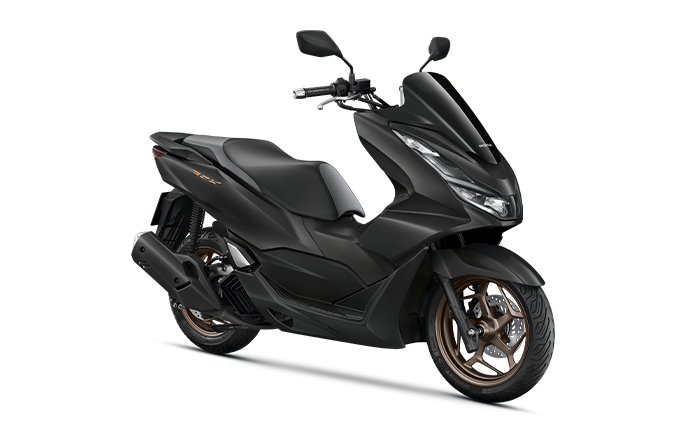
The Honda PCX 160 and Yamaha NMAX 155 are the two most cross-shopped scooters at Chang Thai, priced identically and rented in roughly equal numbers. On paper their specifications are close enough that the choice looks like a coin flip. Ridden back to back on Phuket's roads, they are not the same bike at all — this guide compares them using official manufacturer data and explains what each number actually means once you are riding in real traffic, not a showroom.
In This Guide
- Full Side-by-Side Specifications
- Engine Philosophy: Refinement vs Punch
- Power and Torque, Compared
- Weight and Handling
- Seat Height and Riding Position
- Storage Capacity
- Fuel Tank and Real-World Range
- Braking, ABS, and Convenience Features
- Two-Up Comfort
- Hill Performance
- Common Myths About the PCX vs NMAX Debate
- Running Costs and Fuel Efficiency
- How We Maintain Both Fleets
- Price at Chang Thai
- Final Verdict
- FAQ
Full Side-by-Side Specifications
| Specification | Honda PCX 160 | Yamaha NMAX 155 |
|---|---|---|
| Engine | 157cc, liquid-cooled, SOHC, 4-valve, PGM-FI | 155cc, liquid-cooled, SOHC, 4-valve, fuel injected with VVA |
| Max power | 15.8 hp @ 8,500 rpm | Approx. 15 hp @ 8,000 rpm |
| Max torque | 14.7 Nm @ 6,500 rpm | Approx. 13.9 Nm @ 6,500 rpm |
| Curb weight | 131 kg | 127 kg |
| Seat height | 764 mm | 765 mm |
| Ground clearance | 135 mm | Not officially published |
| Fuel tank | 8.1 L | 7.1 L |
| Under-seat storage | ~30 L | 25 L (fleet spec) |
| Braking | Front and rear disc, ABS | Front and rear disc, ABS |
| Daily rate at Chang Thai (low/high) | ฿450 / ฿500 | ฿450 / ฿500 |
Sources: specifications referenced from Honda's official 2025 PCX specifications release and Yamaha Motor's official NMAX 155 product data, cross-checked against our own fleet units. For a full standalone review of the NMAX 155, see our dedicated NMAX 155 guide.
Engine Philosophy: Refinement vs Punch
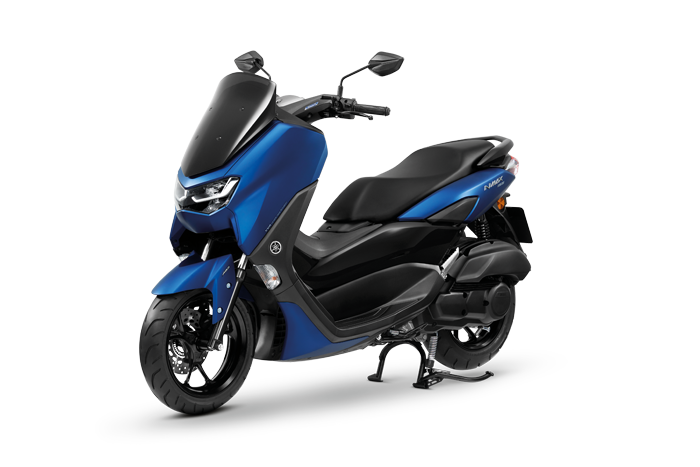
Honda's engine in the PCX 160 is tuned for smoothness above everything else, with Honda's Idling Stop system cutting the engine at a standstill to save fuel and reduce vibration in traffic. Yamaha's approach with the NMAX 155 is built around Variable Valve Actuation, which switches the engine's valve timing depending on RPM to prioritize efficient cruising at low speed and stronger pull once you open the throttle. Neither approach is objectively better — Honda is optimizing for a serene, low-effort ride, while Yamaha is optimizing for a livelier throttle response. This single difference in philosophy explains almost every other difference between the two bikes.
Power and Torque, Compared
On paper, the numbers are close: the PCX 160 makes 15.8 hp against the NMAX 155's roughly 15 hp, and 14.7 Nm of torque against roughly 13.9 Nm. That is a gap small enough to be within normal manufacturing and measurement variance, and neither bike will feel dramatically faster than the other in a straight-line drag from a stoplight. Where they diverge is in how that power arrives — the NMAX's VVA-assisted mid-range makes it feel slightly punchier when you crack the throttle open mid-corner or mid-overtake, while the PCX 160 delivers its power in a flatter, more predictable curve that many riders find easier to modulate smoothly in traffic.
Weight and Handling
The NMAX 155 is 4 kilograms lighter than the PCX 160 — 127kg versus 131kg — which is a small enough difference that you would not notice it purely from lifting the bike off its stand, but it does combine with the NMAX's sportier geometry and firmer suspension tuning to make it feel more eager to change direction through Phuket's coastal curves. The PCX 160's slightly greater weight is distributed to support its wider seat and larger storage box, and translates into a planted, stable feeling at speed rather than sluggishness.
Seat Height and Riding Position
Seat height is essentially a dead heat — 764mm on the PCX 160 versus 765mm on the NMAX 155, a single millimeter apart, so neither bike is meaningfully easier to flat-foot at a stop than the other. The real ergonomic difference is riding posture: the PCX 160 places your feet and hands in a relaxed, upright arrangement designed for comfort over hours, while the NMAX 155 leans you slightly further forward toward the bars in a more engaged, sportier stance. Riders coming from a geared motorcycle tend to gravitate toward the NMAX's posture; riders who want to feel like they are sitting in an armchair tend to prefer the PCX.
Storage Capacity
This is the PCX 160's clearest numerical win: approximately 30 liters of under-seat storage against the NMAX 155's 25 liters in our fleet spec. In practice, both boxes comfortably swallow a full-face helmet, but the PCX has meaningfully more room left over for a day bag, a light jacket, or shopping from a 7-Eleven run, where the NMAX's remaining space after a helmet is noticeably tighter.
Fuel Tank and Real-World Range
The PCX 160's 8.1 liter tank is a full liter larger than the NMAX 155's 7.1 liters, which translates to roughly 300 to 350 kilometers of range on the PCX under mixed riding versus 250 to 300 kilometers on the NMAX, using typical fuel consumption figures for engines in this class. For most Phuket itineraries this difference is academic — both bikes comfortably cover several days of normal tourist riding between fill-ups — but it matters more if you are planning longer touring days further from the main fuel stations in the south of the island.
Braking, ABS, and Convenience Features
Both bikes come with front and rear disc brakes and standard ABS in our fleet, so neither has a safety advantage on paper. Where they differ is convenience tech: the PCX 160 adds Honda's Idling Stop system and a USB-C charging socket as standard, while the NMAX 155 counters with its own Smart Key keyless system, functionally similar to Honda's. Both bikes let you start the ignition, open the seat, and release the fuel cap without physically inserting a key, provided the fob is on your person.
Two-Up Comfort
For two adults riding together over a full day, the PCX 160's wider seat and more upright position make it the clearer choice — this is the single biggest practical reason we recommend it most often to couples sharing one bike. The NMAX 155's narrower, firmer seat is fine for shorter two-up hops but tends to produce more passenger fatigue on rides longer than an hour or two. If two-up comfort is your top priority, the PCX 160 wins this category clearly rather than marginally.
Hill Performance
Neither bike was specifically engineered around ground clearance the way the Honda ADV 160 was — see our ADV 160 Hill Test for a bike built for Phuket's steepest climbs — but between the PCX and NMAX, the NMAX's firmer suspension and marginally lighter weight give it a slight edge in cornering confidence on winding hill roads like the route to Kata Noi. The PCX 160 handles the same roads without difficulty, just with a softer, less eager feel through the corners.
Common Myths About the PCX vs NMAX Debate
A few claims come up often enough in online forums and hotel-lobby conversations that they are worth addressing directly. First, the idea that one bike is meaningfully faster than the other does not hold up against the actual published figures — a gap of well under one horsepower is not something you will feel from the saddle. Second, the claim that the NMAX is "unsafe" for beginners is an overstatement; it simply rewards a bit more rider input than the PCX, which is a different thing from being unsafe. Third, some renters assume the NMAX's sportier styling means it is a bigger, more powerful bike than the PCX — in fact it is the lighter and slightly smaller-engined of the two. Specs, not appearances, should drive the decision.
Running Costs and Fuel Efficiency
Because their engines are so close in displacement and both rely on modern fuel injection, real-world fuel costs between the PCX 160 and NMAX 155 are close enough that they rarely factor into which one renters choose. The PCX's larger tank means fewer stops on a long touring day, which is a convenience factor rather than a genuine cost difference, since you are paying for the same liters of fuel either way just spread across fewer visits to the pump. Neither bike requires premium fuel, and both are tuned for the standard 91-95 octane commonly available at Phuket's PTT and Bangchak stations.
How We Maintain Both Fleets
Both the PCX 160 and NMAX 155 in our fleet follow manufacturer-recommended service intervals rather than a generic rental-shop schedule, covering oil changes, brake pad wear, and tire condition between rentals. The NMAX's VVA system depends on clean oil flow to switch valve timing correctly, so we service those units slightly more conservatively than a basic commuter scooter would need. The PCX 160's Idling Stop system occasionally needs its starter motor and battery checked more frequently than a bike without stop-start technology, since the system cycles the starter far more often over the life of the bike. Neither difference affects how the bike feels to a renter — it is simply how we keep both models performing consistently.
Price at Chang Thai
| Honda PCX 160 | Yamaha NMAX 155 | |
|---|---|---|
| Daily (low/high season) | ฿450 / ฿500 | ฿450 / ฿500 |
| Weekly (low/high season) | ฿2,450 / ฿2,800 | ฿2,450 / ฿2,800 |
| Monthly (low/high season) | ฿6,700 / ฿7,500 | ฿6,700 / ฿7,500 |
The two bikes are priced identically across every rental period, so cost plays no role in the decision. See our pricing page for current rates before booking.
Final Verdict: Which Should You Choose?
Choose the Honda PCX 160 if you are a couple sharing one bike, prioritize comfort over multiple hours in the saddle, or want the larger storage box for day-to-day practicality. Choose the Yamaha NMAX 155 if you are riding solo, have ridden geared motorcycles before and want a scooter that responds more eagerly to throttle and lean input, or plan to spend more time on winding coastal roads than long straight stretches. Both are excellent, well-maintained bikes in our fleet at an identical price, so this is genuinely a decision about riding feel rather than value. For the full three-way comparison including the Honda ADV 160, see our Best Scooter Phuket 2026 guide.
Where to Rent
Both models are available at all five Chang Thai branches: Phuket Airport, Mai Khao, Bang Tao, Chalong, and Phuket Town. Message us on LINE to check same-day availability for either model.
FAQ
Is the Honda PCX 160 or Yamaha NMAX 155 faster?
Their published power and torque figures are close enough (15.8 hp vs approximately 15 hp) that neither is meaningfully faster in practice. The NMAX feels slightly punchier in the mid-range due to its VVA valve timing.
Which has more storage, the PCX 160 or NMAX 155?
The PCX 160, with roughly 30 liters of under-seat storage versus 25 liters on our NMAX 155 fleet units.
Which is better for two people riding together?
The PCX 160, thanks to its wider seat and more upright, comfortable two-up riding position.
Do both bikes have ABS?
Yes, every PCX 160 and NMAX 155 in our fleet comes with standard front and rear disc brakes and ABS.
Which one should a beginner rent?
Either is manageable for a careful beginner, though the PCX 160's more relaxed, forgiving character generally makes it the easier of the two to settle into. For a true first-timer, we more often recommend the lighter Honda Scoopy 125 — see our rider guide for details.
Does the NMAX 155's sportier design mean it has a bigger engine than the PCX 160?
No — the NMAX 155's engine is actually slightly smaller in displacement (155cc versus 157cc) and produces marginally less peak power. Its sporty styling and riding position are a design choice, not an indicator of a more powerful engine.
Can I switch between the two bikes partway through my rental?
In most cases yes, subject to availability — message us on LINE if you try one and decide the other suits you better, and we can usually arrange a swap at your nearest branch.