
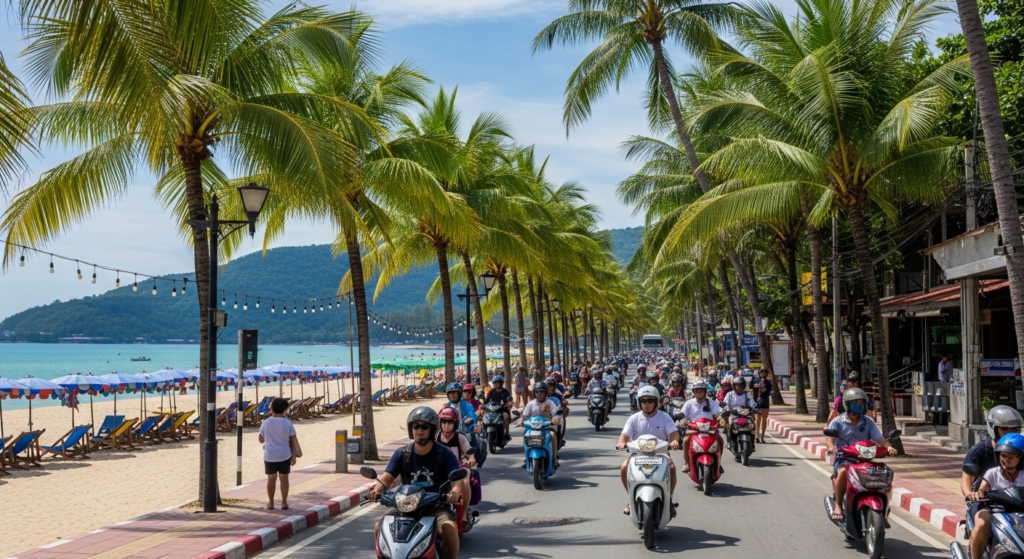
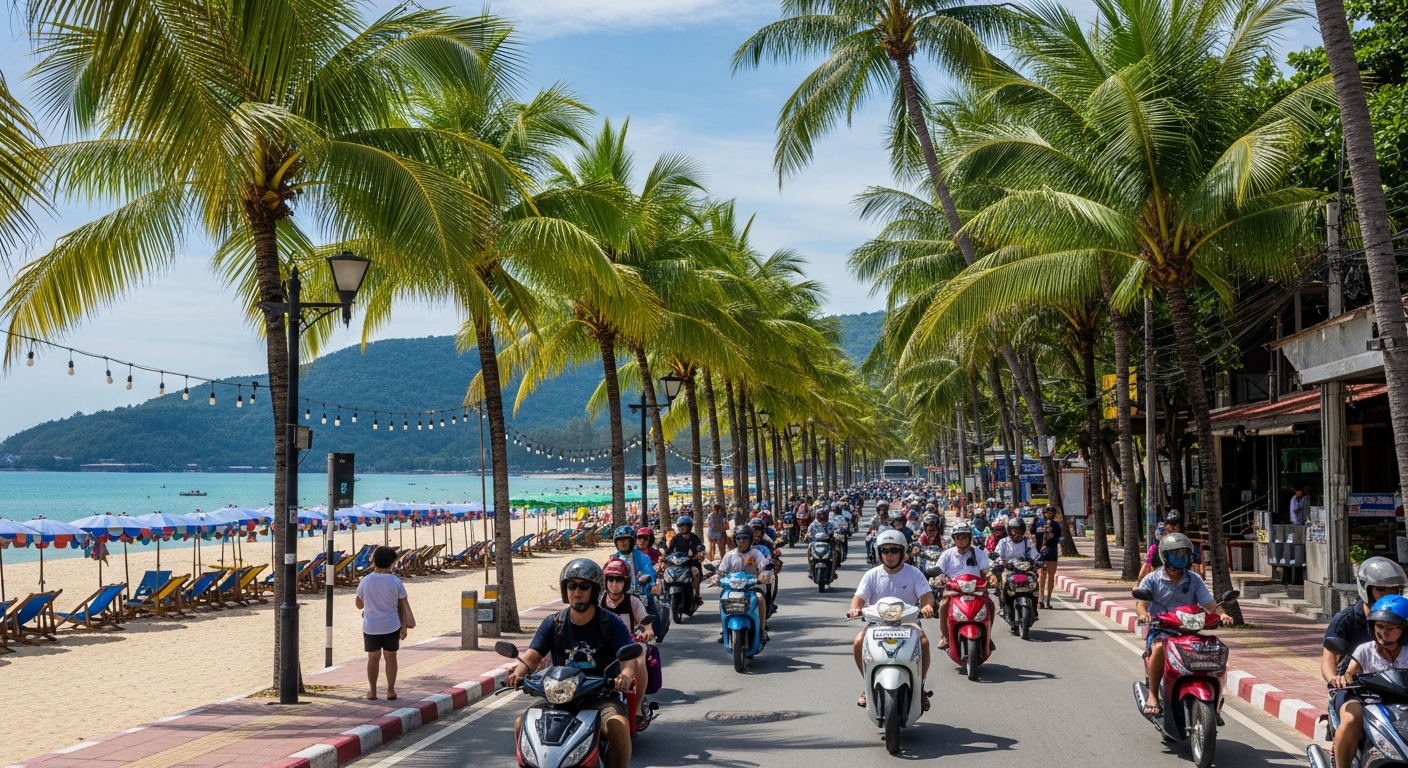
Phuket does not have one single "best time to visit" — it has several distinct seasons, and each one changes what renting and riding a scooter actually feels like. High season brings perfect weather and packed roads. Songkran brings water fights that turn every street into a slip risk. This guide covers both, plus the practical booking and safety adjustments that make the difference between a stressful week and a smooth one.
What "High Season" Actually Means in Phuket
Phuket's high season runs roughly from November through March, when the northeast monsoon brings dry weather, calm seas, and clear skies. It is the most comfortable time of year to ride a scooter, with none of the sudden downpours that define the rainy months. The trade-off is volume: this is when the island receives the largest number of visitors, and every part of the experience that involves other people — traffic, parking, rental availability — gets noticeably more crowded than during the quieter months.
Traffic Patterns During High Season
Patong, Kata, and Karon see the heaviest congestion during high season, particularly in the late afternoon and early evening as day-trippers head back from the beaches and the dinner crowd starts moving. The Chalong roundabout and the main bypass road also slow down significantly during these hours. A scooter still moves through this traffic far faster than a car or taxi, but it demands more attention — more vehicles changing lanes without signaling, more tour vans stopping suddenly, and more pedestrians crossing between parked cars near the beach roads. If you are new to riding in Thailand, avoid arriving into Patong for the first time during the 5pm to 7pm rush; ride in during a quieter mid-morning window instead to get comfortable with local traffic habits first.
Parking Gets Harder, Not Impossible
Popular viewpoints, beach entrances, and restaurant strips fill their scooter parking areas faster during high season, especially around sunset at spots like Promthep Cape. The habit that saves the most frustration is simply arriving 20 to 30 minutes earlier than you would in low season, particularly for anything scheduled around sunset. Motorbike parking is almost always available somewhere within a short walk even when the closest spots are full — it is rarely a reason to change your plans, just something to budget extra time for.
Book Your Scooter Ahead of Time
The single biggest difference high season makes to renting is availability, not price. Popular models like the Honda PCX 160 and Honda ADV 160 can sell out at individual branches during the busiest weeks of December and January, particularly around Christmas and New Year. If your travel dates fall in this window, message us on LINE a few days before arrival to confirm your preferred model rather than assuming you can simply walk in and choose on the day.
New Year's Eve and the December-January Peak
The two weeks spanning Christmas and New Year are the single busiest stretch of the entire year in Phuket. Roads around Patong and the main beach strips get genuinely congested in the evenings, and hotel and rental demand both spike. If you plan to be on the island for New Year's Eve specifically, book your scooter at least a week ahead, and expect Patong's beach road area to be effectively closed to casual through-traffic on the night itself as it becomes a pedestrian street party.
Low Season: The Trade-Off Worth Knowing About
Roughly May through October is Phuket's low season, and while our Rainy Season Riding Techniques guide covers the weather side of it, the rental side of low season is worth knowing too. Availability is rarely an issue — you can usually walk into any branch and choose from the full range of models same-day. Roads are quieter, parking at viewpoints and restaurants is easier to find, and you will often see slightly lower rates than the high season pricing. Rain showers are typically short and predictable rather than constant, often arriving in a defined afternoon window rather than all day, which means a rider who plans around the forecast can still get a full riding day in most of the time. For anyone prioritizing easy bookings and quieter roads over guaranteed sunshine, low season is genuinely underrated.
Songkran: Thailand's Water Festival on Two Wheels
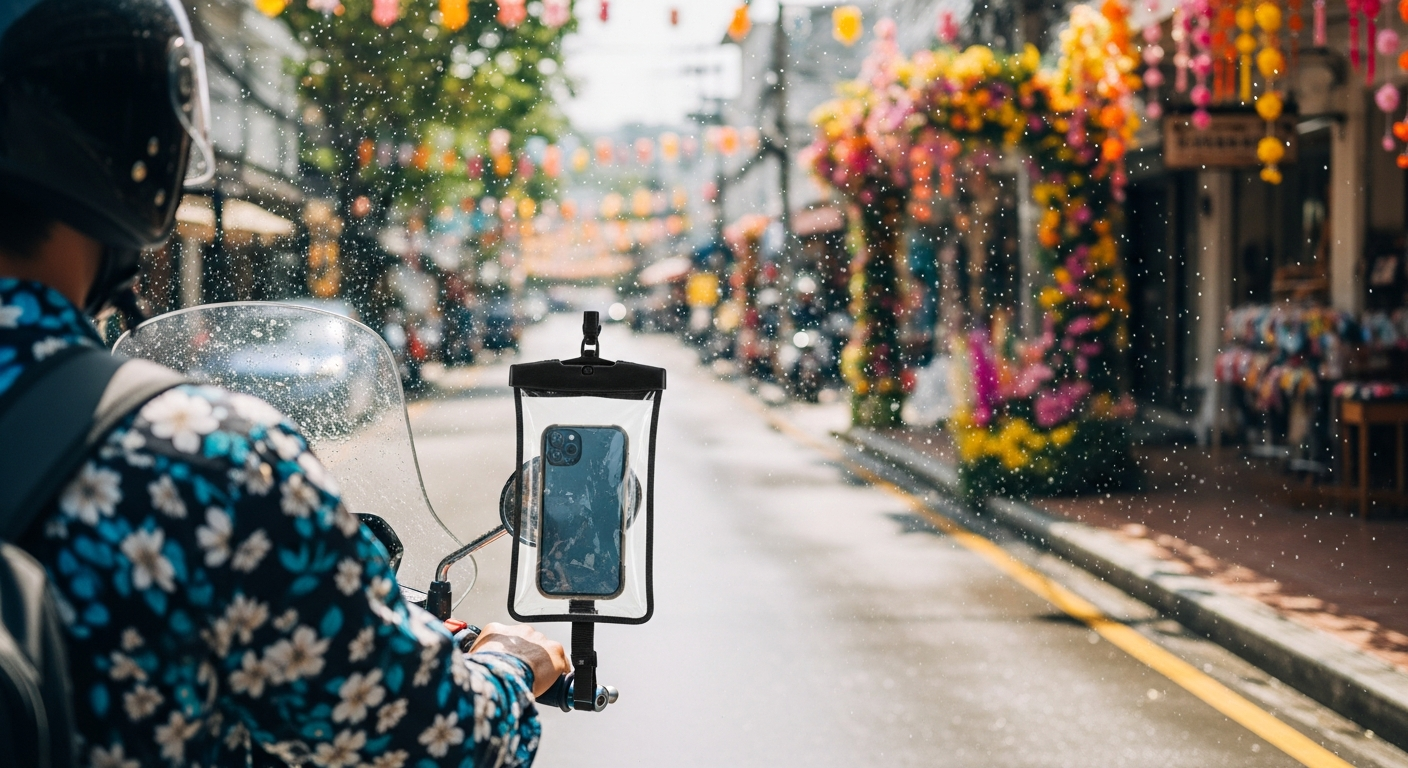
Songkran falls in mid-April and is Thailand's traditional New Year, celebrated island-wide with water fights that spill out onto nearly every street. It is one of the most memorable times to experience Phuket, but it is also the one week of the year where riding a scooter requires real preparation. Roads get wet and slippery from thrown water, visibility can drop when you are hit with a bucket or hose at close range, and the crowds along Bangla Road and the main tourist strips make low-speed riding the only safe option. For a full list of where the water fights happen, see our older Songkran location guide.
Riding Safely During Songkran
Slow down more than you think you need to. Wet asphalt combined with soap, powder, and standing water creates a genuinely different braking surface than a normal rainy day, and the sheer density of people stepping into the road to throw water means your following distance and reaction time both need to increase. Put your phone in a sealed waterproof pouch before you leave — not just water-resistant, but genuinely sealed — since a direct hit from a bucket of water at close range is common and unpredictable. Keep your visor down if your helmet has one, both for water and for the powder that is sometimes mixed in. If you are riding through the busiest stretches of Bangla Road or Patong Beach Road during peak hours, expect to go at walking pace for long stretches, and plan your route around them rather than through them if you actually need to get somewhere on time.
Songkran Wet Roads vs. Rainy Season
Songkran's wet roads and genuine monsoon rain are different problems that call for similar caution. Our Rainy Season Riding Techniques guide covers braking distance, hill cornering, and visibility in real monsoon downpours, and most of that advice about slowing down early and avoiding hard braking applies directly to Songkran's wet streets as well. The main difference is duration and predictability — a rain shower passes, but Songkran's wet, crowded streets persist for hours across the whole festival period.
Heat: The Underrated High Season Risk
High season's clear skies also mean intense midday sun, and heatstroke is a real risk for riders who underestimate it, especially on longer routes without shade. Carry water, wear light-colored riding gear where possible, and take breaks in shade during the hottest hours between roughly 11am and 3pm rather than pushing through a long ride. See our heatstroke prevention guide for the warning signs and what to do if you or a riding companion starts showing symptoms.
Phuket Bike Week: A Different Kind of Peak
Separately from tourist high season, Phuket Bike Week draws thousands of motorcycle enthusiasts from across Asia for a multi-day gathering, typically bringing a noticeable spike in larger motorcycles on the road and increased demand for bike rentals island-wide during the event dates. If your visit overlaps with it, expect livelier evening traffic around the main event venues and book any big-bike rentals well ahead — see our Phuket Bike Week guide for details on the event itself.
Quick Seasonal Checklist
| Period | Main challenge | What to do |
|---|---|---|
| Nov-Mar (High Season) | Traffic and parking congestion | Book ahead, avoid the 5-7pm Patong rush |
| Late Dec - Early Jan | Peak crowds and sold-out bikes | Reserve your model at least a week ahead |
| Mid-April (Songkran) | Wet roads, low visibility, crowds | Slow down, seal your phone, avoid Bangla Road at peak hours |
| May-Oct (Rainy Season) | Sudden downpours, slick roads | See our rainy season riding guide |
| Year-round midday sun | Heatstroke risk | Hydrate, shade breaks, light gear |
What to Pack, By Season
- High season (Nov-Mar): sunscreen, sunglasses, a light long-sleeve layer for sun protection, and a printed or saved copy of your booking if you reserved a specific model ahead of time.
- December-January peak: everything above, plus patience for evening traffic around Patong and a backup plan if your first-choice branch is fully booked.
- Songkran (mid-April): a genuinely sealed waterproof phone pouch, a change of clothes if you are heading out afterward, and a helmet with a visor if you have the choice.
- Rainy season (May-Oct): a lightweight rain poncho that fits over your bag, and see our rainy season guide for road-specific techniques.
- Year-round: water, and a habit of checking the sky before a long ride regardless of the season.
Book Ahead With Chang Thai
Whichever season you are visiting in, Chang Thai's five branches — Phuket Airport, Mai Khao, Bang Tao, Chalong, and Phuket Town — can hold a specific model for you if you message ahead on LINE. This matters most during the December-January peak and the days immediately around Songkran, when walk-in availability is least predictable.
FAQ
Is it safe to ride a rental scooter during Songkran?
Yes, if you slow down, seal your electronics, and avoid the busiest water-fight streets during peak hours. Most Songkran-related incidents come from riding at normal speed through wet, crowded areas rather than from the festival itself.
Do rental prices go up during high season?
Chang Thai's rates have a published high season rate that applies during the busiest months — see our pricing page for exact figures. The bigger risk during high season is availability, not price.
When exactly is Songkran, and how long do the water fights last?
Songkran is officially April 13-15, though celebrations in tourist areas like Patong often extend a few days on either side.
Should I avoid riding altogether during Songkran?
Most residents and long-term visitors still ride throughout Songkran — it just requires more caution and slower speeds than a normal day, not avoiding the road entirely.