
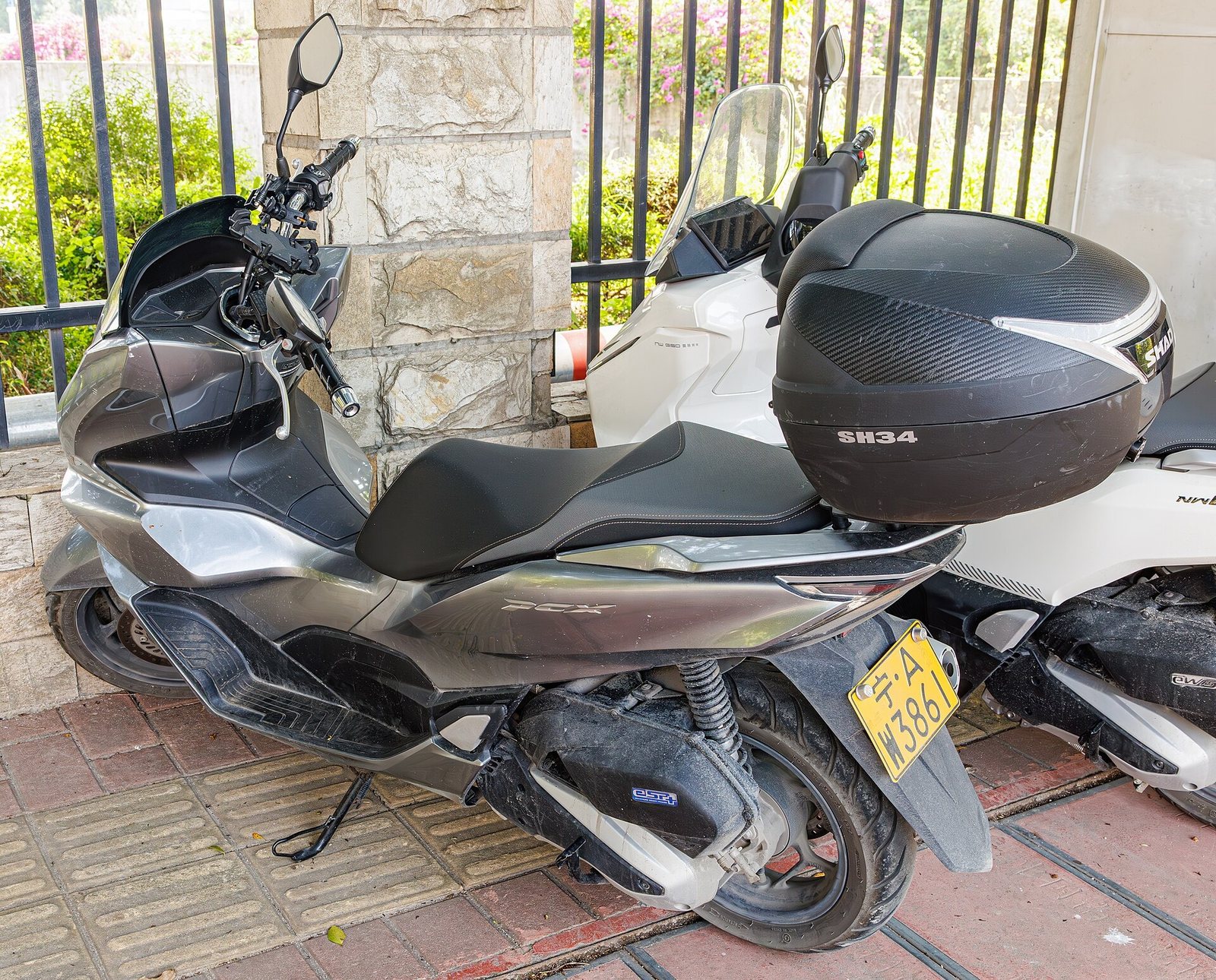
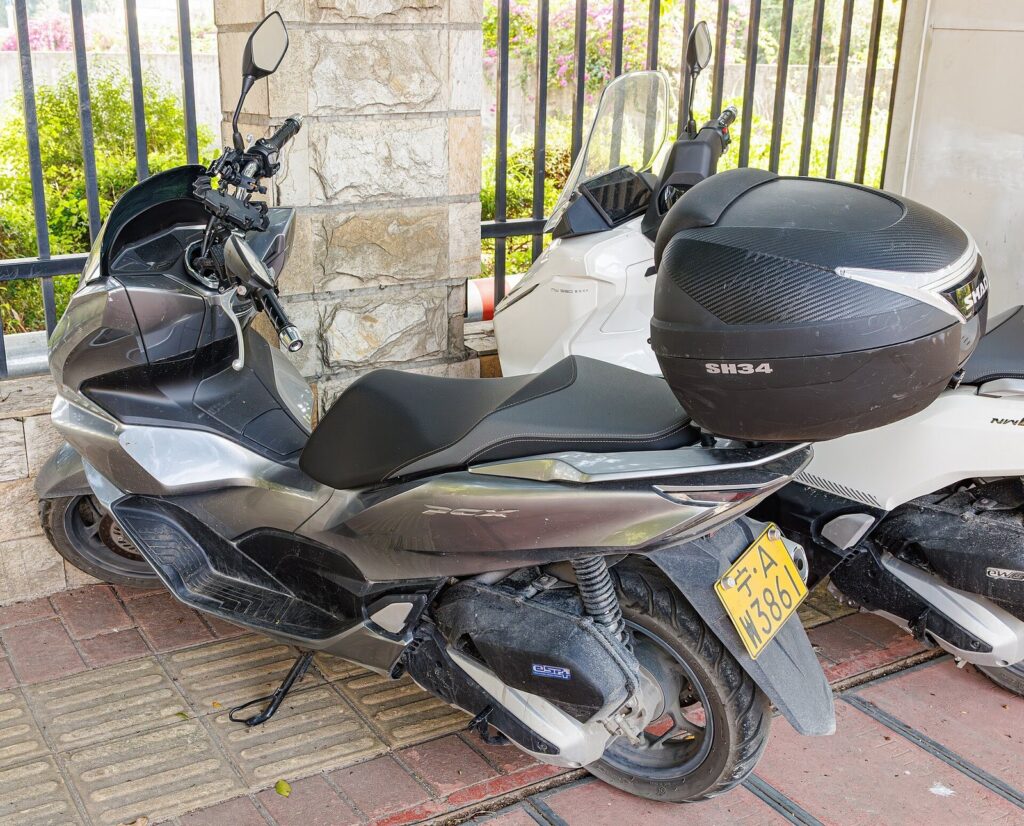
We recommend the Honda PCX 160 to more couples than any other bike in our fleet, for reasons already covered in our PCX 160 vs NMAX 155 comparison: the wider seat, upright riding position, and generous storage all matter more once there are two of you on one bike for a full day. This guide skips the spec sheet and goes straight to four real two-up routes around Phuket, with honest notes on distance, road quality, and what to actually expect.
For the full picture on prices, see Thailand scooter prices 2026.
In This Guide
- Why the PCX 160 Two-Up
- Route 1: Chalong to Rawai to Nai Harn
- Route 2: Kata, Karon and Promthep Cape
- Route 3: Bang Tao to Surin to Kamala
- Route 4: Chalong to Big Buddha, at a Gentler Pace
- Comparing the Four Routes at a Glance
- Fuel and Rest Stops Along the Way
- Best Photo Stops on Each Route
- Packing and Comfort for a Two-Up Day
- Best Time of Day and Season
- Checking the Weather Before You Commit
- Two-Up Safety Tips
- Talking Through the Day Before You Ride
- Renting as a Couple: What to Bring
- Where to Rent
- FAQ
Why the PCX 160 Two-Up
A wider, flatter seat and a more upright riding position sound like small details until you have spent three hours riding two-up on a narrower, firmer-seated alternative. The PCX 160's ergonomics were designed around comfort over distance rather than outright sportiness, which is exactly the priority for a couple planning a full day of stops rather than a quick solo blast down the coast. Its roughly 30 liter under-seat storage also comfortably swallows two half-face helmets or one full-face helmet plus sunscreen, water, and a light bag, which matters when you are stopping at four or five places in a single day.
Route 1: Chalong to Rawai to Nai Harn
This is the easiest two-up route to start with: flat, well-paved roads connecting Chalong to Rawai's fishing pier and seafood restaurants, then continuing south to Nai Harn Beach and its calm, swimmable bay. The full loop covers roughly 15 to 20 kilometers depending on your exact stops and takes half a day at a relaxed pace with time for lunch and a swim. Traffic is light outside of peak morning and evening hours, making it a forgiving choice for a couple riding two-up together for the first time.
Route 2: Kata, Karon and Promthep Cape
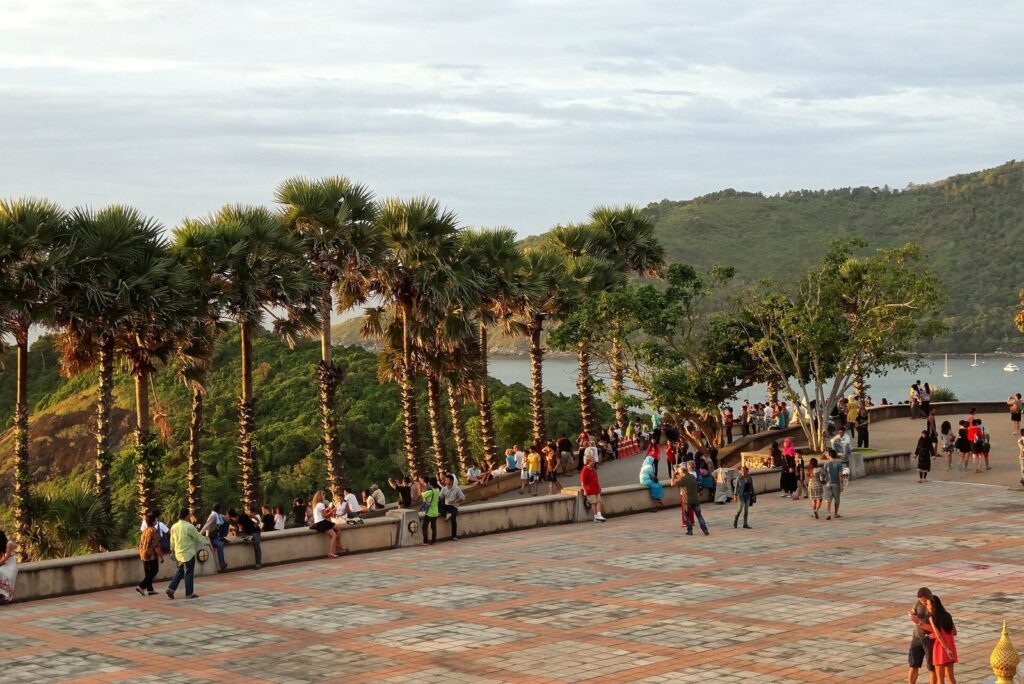
Starting from Kata or Karon beach, this coastal route winds south past small viewpoints before ending at Promthep Cape, widely considered Phuket's best sunset spot. Plan to arrive at least 30 minutes before sunset, since the small parking area fills up fast in high season — see our High Season guide for what to expect during the busiest months. The road has a few gentle curves but nothing technical, making it comfortable two-up even for a rider still getting used to the PCX 160's size.
Route 3: Bang Tao to Surin to Kamala
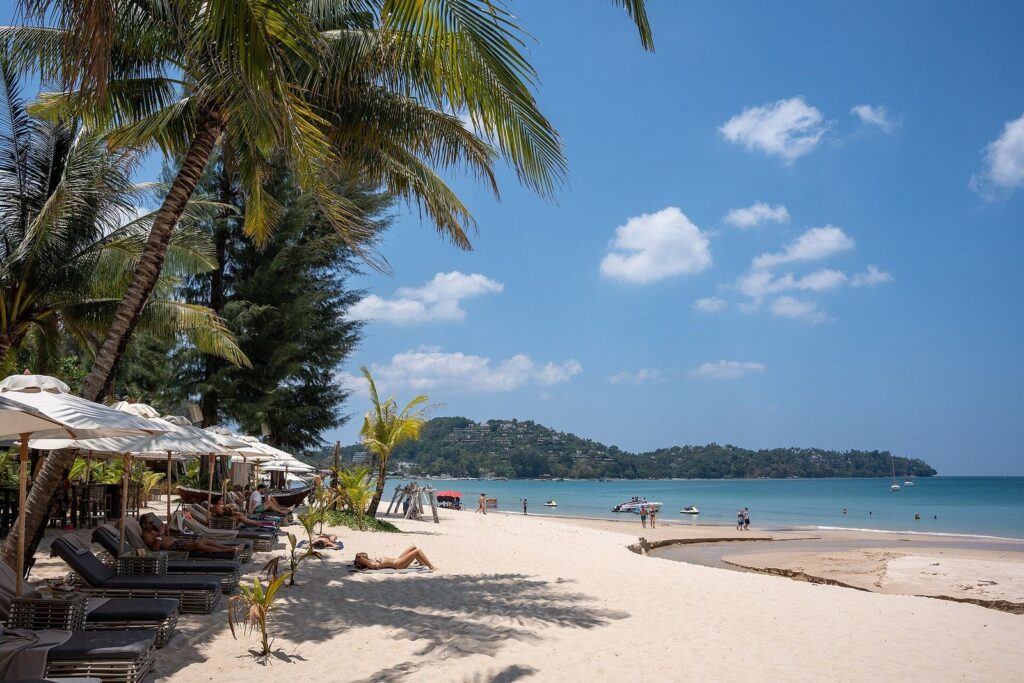
This route strings together three of Phuket's most attractive west-coast beaches with flat, well-maintained roads the entire way. Bang Tao's Laguna area, Surin's upscale beach clubs, and Kamala's quieter, more local atmosphere each have a distinct character, making this route feel varied without much technical riding difficulty. Budget a full day if you want proper time at each beach rather than just passing through, and note that this side of the island is a longer ride from Chalong-area branches — see our area guide for typical cross-island travel times.
Route 4: Chalong to Big Buddha, at a Gentler Pace
The PCX 160 was not built around ground clearance the way the Honda ADV 160 was, but a two-up ride to the Big Buddha on Nakkerd Mountain is still entirely manageable at a steadier pace rather than pushing hard through the switchbacks. The final approach is the steepest section, and taking it slowly rather than trying to carry speed through the corners keeps the ride comfortable for the passenger and well within the PCX 160's capability. If hill routes are a bigger part of your plan than an occasional stop, the ADV 160 remains the more natural choice for two-up hill riding.
Comparing the Four Routes at a Glance
| Route | Distance | Difficulty | Best For |
|---|---|---|---|
| Chalong - Rawai - Nai Harn | 15-20 km loop | Easy, flat | First-time two-up riders |
| Kata - Karon - Promthep Cape | 10-15 km one-way | Easy, gentle curves | Sunset-focused half-day trip |
| Bang Tao - Surin - Kamala | 20-25 km loop | Easy, flat | Full-day west coast beach hopping |
| Chalong - Big Buddha | 10-12 km one-way | Moderate, steep final climb | Couples comfortable with a slower hill pace |
Fuel and Rest Stops Along the Way
All four routes pass at least one PTT or Bangchak fuel station, so range anxiety is not a real concern on any of them even starting from a partial tank. The Chalong-Rawai-Nai Harn and Bang Tao-Surin-Kamala routes both pass through areas dense with cafes and 7-Elevens, making impromptu stops easy to work into the day without pre-planning. The Chalong to Big Buddha route has fewer stopping options once you start the climb itself, so it is worth topping up fuel and grabbing water at the base before beginning the ascent.
Best Photo Stops on Each Route
On the southern loop, the viewpoint just before Nai Harn Beach offers a wide bay shot that most tourists riding straight through miss entirely. The Kata-Karon-Promthep route has multiple pull-off points along the cliff road south of Kata that give a different angle on the coastline than the crowded main Promthep Cape platform itself. On the west coast route, the quieter northern end of Kamala beach, away from the main beach road, tends to be less crowded for photos than Bang Tao or Surin during the middle of the day. For Big Buddha, the summit itself is the obvious stop, but the switchback section partway up offers a genuinely good elevated view back toward Chalong that most riders pass without stopping for.
Packing and Comfort for a Two-Up Day
Pack light and centralize weight low and close to the bike rather than in a backpack on the passenger's back, which affects balance more than most riders expect over a full day. A dry bag or sealed pouch for phones and cash fits easily in the under-seat storage alongside sunscreen and a light layer for the occasional cloud cover. Plan a rest stop at least every 60 to 90 minutes on longer routes like the west coast loop — two-up riding is more physically tiring for the passenger than it looks, and short breaks make a noticeable difference by the end of the day.
Best Time of Day and Season
Early morning departures, before roughly 10am, avoid both the day's heat and the worst of the traffic around popular beach access roads, and give you first pick of parking at spots like Promthep Cape or Nai Harn. High season (November to March) offers the most reliable weather for a full day of two-up touring, though it also means busier roads and parking — see our seasonal guide for the trade-offs. During the rainy season, build a buffer into your schedule rather than a tight itinerary, since a short afternoon downpour is common but rarely lasts long.
Checking the Weather Before You Commit
Phuket's weather can shift meaningfully within a single day, particularly during the shoulder months between high and rainy season, so it is worth checking a short-range forecast the morning of a longer route like the west coast loop or the Big Buddha climb rather than relying on how the sky looks at breakfast. A route that starts clear can still meet an afternoon shower, and knowing that in advance lets you plan your stops so you are somewhere with cover, like a cafe in Kamala or the shops near the Big Buddha car park, rather than caught on an exposed stretch of road. None of the four routes in this guide are unsafe in light rain, but a soaked, unplanned hour two-up is a very different experience from a dry one.
Two-Up Safety Tips
The passenger should hold onto the rider's waist or the bike's grab rail rather than leaning back on the top box, and both riders should wear proper helmets rather than the passenger going without, which remains a common and risky habit among tourists. Communicate before moving off from a stop, since a passenger shifting weight unexpectedly at low speed is one of the more common causes of an awkward wobble. On longer routes, agree on hand signals or a simple system for the passenger to indicate "I need a break" without shouting over engine and wind noise.
Talking Through the Day Before You Ride
The couples who have the smoothest two-up days are usually the ones who spend five minutes before setting off agreeing on pace, stops, and who is navigating. A rider who wants to make good time and a passenger who wants to stop for every photo opportunity can create quiet friction over a full day if it is never discussed upfront. Deciding in advance roughly how many stops you want, whether you are prioritizing beach time or sightseeing, and what time you want to be back changes a route from a source of tension into the relaxed day it should be.
Renting as a Couple: What to Bring
Both riders should bring their own International Driving Permit if either of you might want to swap and ride at some point during the trip — see our IDP guide for what qualifies. Even if only one of you plans to ride, having both documented as authorized riders on the rental agreement avoids complications if plans change partway through your stay. Bring sun protection for both riders regardless of who is driving, since the passenger gets just as much sun exposure over a full day as the rider does.
Where to Rent
The Honda PCX 160 is available at all five Chang Thai branches: Phuket Airport, Mai Khao, Bang Tao, Chalong, and Phuket Town. For the west coast route, Bang Tao is the most convenient pickup point; for the southern routes, Chalong is closest.
FAQ
Which of these four routes is easiest for a first two-up ride together?
The Chalong to Rawai to Nai Harn loop — flat, short, and forgiving if you are both still getting comfortable riding together.
Can the PCX 160 handle two adults plus luggage for airport transfers?
For light luggage, yes, using the under-seat storage and a small bag between the rider's feet. For full suitcases, we recommend our delivery service instead of carrying luggage two-up.
How long should we budget for the Bang Tao to Kamala route with stops?
A full day if you want real beach time at each stop, or about half a day if you are mainly sightseeing without swimming.
Is it safe to ride two-up to Big Buddha on the PCX 160?
Yes, at a measured pace rather than pushing hard through the final climb. For frequent hill routes, the ADV 160 is the more natural two-up choice.
Do both riders need their own International Driving Permit?
Only the person riding needs one at any given moment, but if you might swap who drives during the trip, it is simplest for both of you to bring one — see our IDP guide.
Which route is best if we only have half a day together?
The Kata, Karon, and Promthep Cape route fits comfortably into a half day and ends on a strong note with sunset at the cape.
Related Reads
- Honda PCX 160 vs Yamaha NMAX 155
- Phuket Scooter Route: Big Buddha, Promthep Cape & Rawai
- Honda ADV 160 Phuket Hill Test
- Which Scooter Fits You? A Rider-by-Rider Guide
Photo credits: “HONDA PCX 160 China (3)” — Dinkun Chen, CC BY-SA 4.0, Wikimedia Commons · “Promthep Cape - panoramio (3)” — Mikhail Deynekin, CC BY-SA 3.0, Wikimedia Commons · “Bang Tao Beach (53667853591)” — Raita Futo from Tokyo, Japan, CC BY 2.0, Wikimedia Commons