

Rawai sits at the southern tip of Phuket, past the resort strips of Kata and Karon, where the island's pace slows down and the roads open up. On a map, the beaches, viewpoints, and villages around Rawai look close together; on the ground, they're spread across several kilometers of hilly, junction-heavy roads with no footpaths connecting them. A scooter isn't a luxury here — it's how the area actually gets explored, whether you're heading to the pier for a boat to the islands, up to Promthep Cape for sunset, or inland to Wat Chalong. It's also why many visitors staying in Rawai choose to rent a scooter delivered to Rawai rather than rely on taxis, which are infrequent and comparatively expensive this far from central Phuket.
Planning to ride here? See scooter rental in Rawai — free delivery on rentals of 7+ days.
Rawai Beach and the Seafood Market
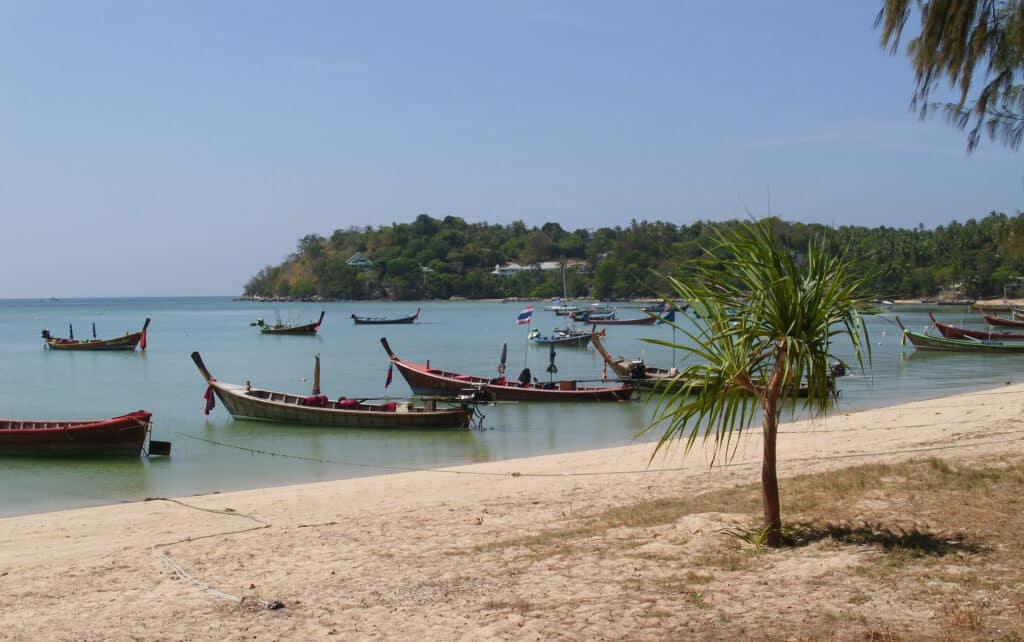
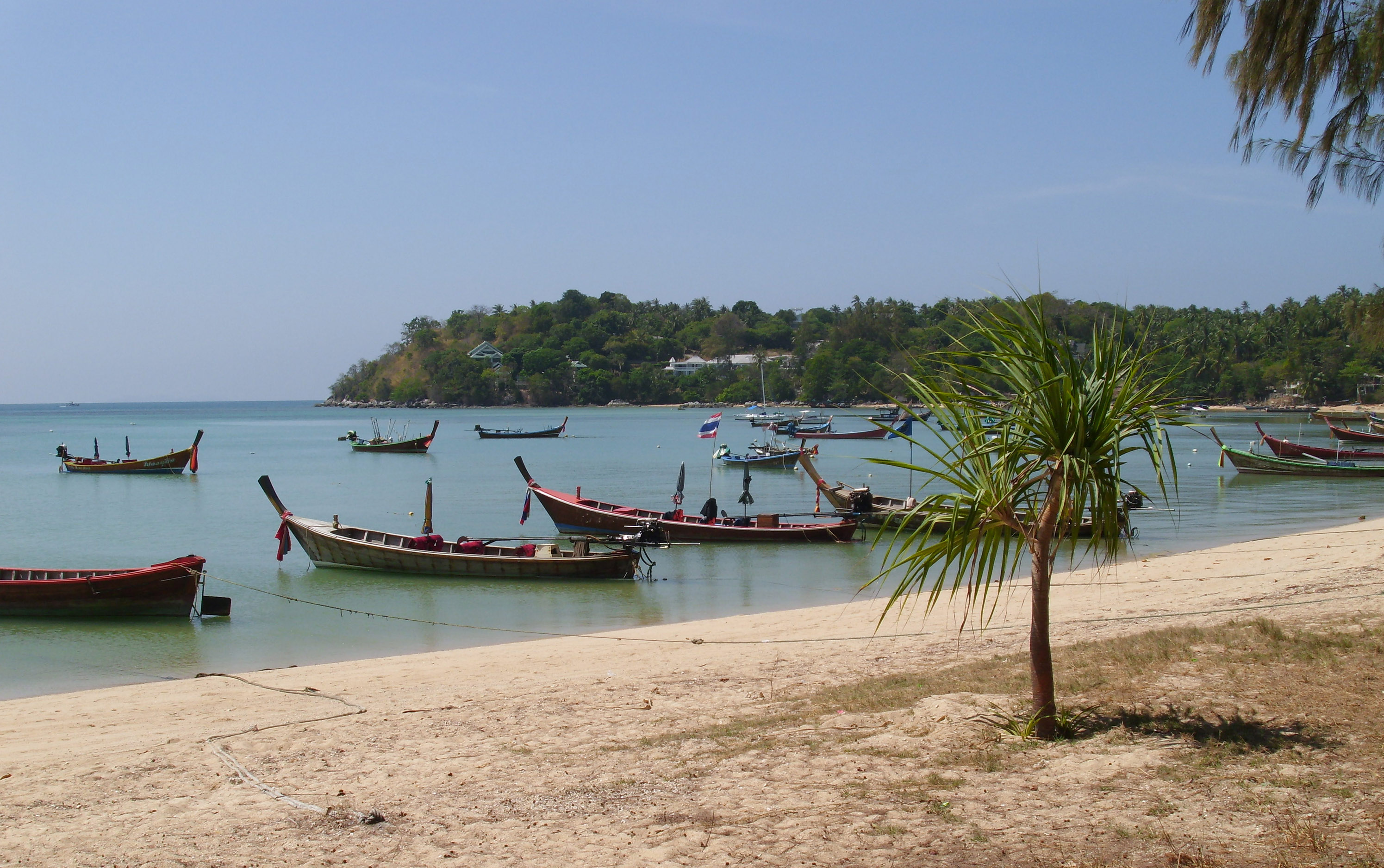
Rawai Beach itself isn't the place for a swim — the shallow water is full of moored longtail boats and the seabed is rocky rather than sandy, especially at low tide. What it's good for is a walk along the shaded promenade that runs the length of the beach, past rows of seafood stalls and small cafes, and watching the fleet of longtail boats that anchor offshore and head out to the islands each morning.
The Rawai Seafood Market, set back from the beach near the pier, works on a buy-and-cook system: you pick fresh prawns, crab, squid, or fish from the stall displays, have it weighed and priced, then carry it to one of the restaurants behind the stalls to be grilled, steamed, or stir-fried to order for a separate cooking fee, typically 100–200 baht per dish. The market runs roughly from 6am to 6pm, but the fishing boats come in early, so the best selection is in the morning.
The Chao Ley Sea Gypsy Village
Along the northern shore of Rawai Beach, near the pier and market, is one of Phuket's few remaining Chao Ley (sea gypsy) settlements. The community traces its ancestry to seafaring peoples who have lived along the Andaman coast for generations and has fished these waters for centuries. It's a working residential village, not a tourist attraction, so it's worth treating it that way while walking through — stick to public areas and ask before photographing residents or their boats.
Rawai Pier: Boats to Coral Island and the Racha Islands
Rawai Pier, at the southern end of the beach, is one of Phuket's main departure points for short island trips. Coral Island (known locally as Koh Hae or Koh Hey) is the closest — about 15 minutes away by speedboat, longer by traditional longtail — and is a common half-day trip for clear water and a sandy beach without the crowds of the islands off Patong. Longtail boats can usually be chartered directly at the pier, with a full boat (holding six to ten people) running roughly 1,500–2,500 baht return depending on the season and how well you negotiate.
The Racha Islands (Koh Racha Yai and Koh Racha Noi) lie further out, about 12 kilometers south, and take roughly 45 minutes to an hour by speedboat — too far for most longtail charters. They're known for notably clear water and are popular with divers and snorkelers. Most organized speedboat tours to Racha actually depart from Chalong Pier rather than Rawai Pier, so if that's the plan, it's usually booked as a tour with hotel pickup rather than arranged at the Rawai pier itself.
A Short Ride to Nai Harn Beach
Nai Harn Beach is about 2 kilometers from central Rawai — roughly a five-minute ride along the coast road or the narrower inland Soi Saiyuan shortcut. Unlike Rawai Beach, Nai Harn has genuine swimming water: calmer and sandier, and backed by Nai Harn Lake, a freshwater lake ringed by a 2.2-kilometer path that locals use for jogging and cycling in the early morning and evening. Nai Harn gets busy in the December-to-March high season, when parking along the beach road fills up early, so arriving before mid-afternoon makes for an easier visit.
Ao Sane's Hidden Cove
Continue past Nai Harn Beach, following the road past The Nai Harn resort, and after about 500 meters it reaches Ao Sane — a small, boulder-strewn cove that most day-trippers miss. Scooters park at the top, near a stairway down to the water; the beach itself is narrow and rocky in places, better suited to reef shoes than bare feet. The reward is clear, calm water with coral close to shore, making it one of the better snorkeling spots on this side of the island, especially around high tide. A couple of simple, low-key beach bars sit right on the sand for a drink or a plate of food afterward.
Promthep Cape, Phuket's Southern Tip
From Rawai, it's about 2 kilometers — around ten minutes by scooter — to Promthep Cape, the southernmost point of Phuket island. It's the most photographed sunset spot on Phuket for good reason: the headland juts out with unobstructed views over the Andaman Sea, with smaller islands visible in the distance on a clear day. Entry is free and the viewpoint is open 24 hours, but it gets genuinely crowded with tour vans in the final hour before sunset during high season. A quieter alternative sits just off the same access road: Wat Phra Prom (also known as Promthep Monastery), a small hillside temple that looks back over Promthep Cape from a different angle and sees only a fraction of the visitors.
Inland to Wat Chalong and the Big Buddha
Heading inland from Rawai instead of along the coast leads to two of southern Phuket's best-known landmarks. Wat Chalong — generally considered Phuket's most important Buddhist temple — is roughly 15 minutes away by scooter in the Chalong area. From there, the road climbs uphill to Big Buddha, about 10 kilometers and roughly 20 minutes from Rawai in total. The viewing platform around the statue looks out over the hills of southern Phuket, with the coastline and, on a clear day, nearby islands visible in the distance. There's no public transport up to Big Buddha — visitors arrive by scooter, car, or taxi — which makes it an easy stop to combine with Wat Chalong on the same ride out of Rawai.
Practical Tips for Riding Around Rawai
A few things are worth knowing before setting out from Rawai on two wheels:
- Route 4028, the main paved road linking Rawai to Nai Harn and Promthep Cape, is well-surfaced but busy; the inland Soi Saiyuan shortcut is narrower with blind 90-degree bends, so keep speeds down and use your horn on tight corners.
- Roads to coves like Ao Sane often end in stairs or steep, narrow sections — park where other bikes are already parked rather than trying to ride all the way down.
- Fuel stations are sparser out here than in central Phuket; small roadside stalls sell petrol by the bottle if you're running low between fill-ups.
- Traffic bunches up near the pier and seafood market in the late afternoon as tour vans and tuk-tuks arrive for sunset trips, so allow extra time in that window.
- Helmets are required by law, and checkpoints do operate around the Chalong and Rawai area.
Renting a Scooter in Rawai with Chang Thai
Chang Thai's main branch is a short ride away in Chalong, about ten minutes from Rawai, and the company delivers scooters free of charge to hotels, villas, and condos anywhere in Rawai for rentals of three days or longer (a small delivery fee applies for one- or two-day rentals). Rates start from 300 baht a day, and — unlike some local operators — Chang Thai doesn't hold your passport as a deposit. A Honda Click 125 covers short hops to the seafood market or Nai Harn, while a Honda PCX 160 or ADV 160 is more comfortable two-up for the longer ride out to Promthep Cape and the Big Buddha. To rent a scooter delivered to Rawai, message Chang Thai on WhatsApp at +66 93 687 1999, or stop by one of its branches in Chalong, Mai Khao, Phuket Airport, Bangtao, or Phuket Old Town.