
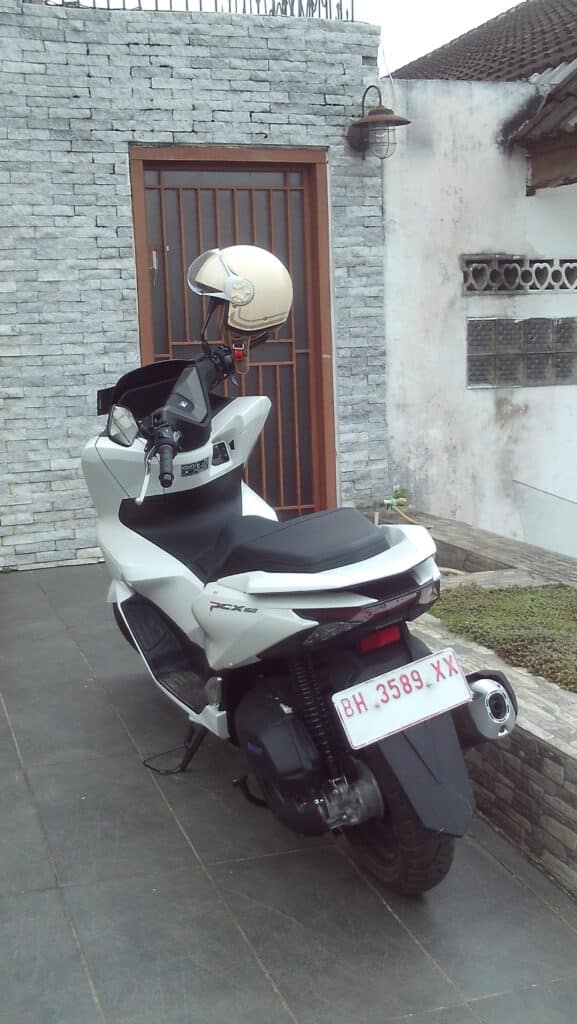

Search "Honda PCX160 maintenance" and you'll find a lot of pages telling you to "check your oil regularly" and "keep your tires properly inflated." None of them tell you what that actually means in numbers. Chang Thai Motorbike Rental runs a working fleet of Honda PCX160 scooters out of our Chalong branch in Phuket, and we service them on a schedule, not a feeling. This guide has the real specs — oil type and capacity, change intervals, tire pressure, spark plugs, valve clearance, and the fluids Honda's own maintenance schedule tells you to change on a calendar, not just a mileage counter.
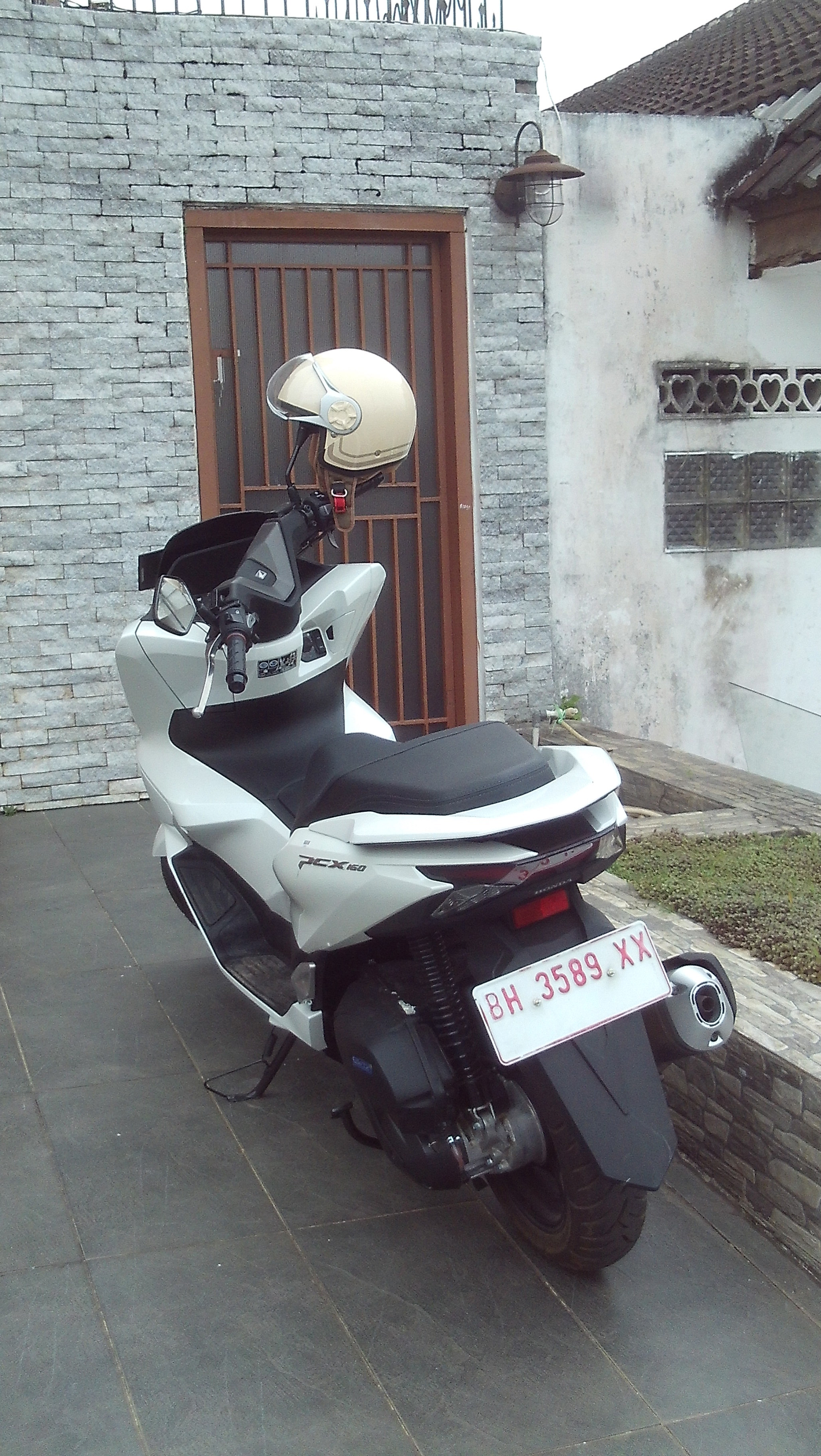
Honda PCX160 Maintenance Specs at a Glance
These figures come from Honda's official PCX160 maintenance schedule and cross-checked owner's manual data. Where the source material printed a range rather than one exact figure, we've kept the range rather than making up a false-precise number.
| Item | Specification |
|---|---|
| Engine | 156.9cc liquid-cooled single-cylinder, 4-valve eSP+ |
| Engine oil type | SAE 10W-30 motorcycle-specific 4-stroke oil |
| Oil capacity (at a routine change) | Approx. 0.8–0.9 litres, drain and refill |
| Oil change interval (Honda standard schedule) | Every 4,000 km or 12 months, whichever comes first |
| Oil strainer screen | Reusable mesh screen, cleaned at scheduled services (PCX160 has no spin-on oil filter cartridge) |
| Spark plug | Replace approximately every 8,000 km |
| Valve clearance | Inspected from around 12,000 km, then checked periodically through to 36,000 km |
| Drive system | CVT (Honda V-Matic) belt plus an enclosed final-drive gear case — there is no drive chain to oil or adjust |
| Final drive gear oil | Replace every 2 years |
| Drive belt | Inspected from around 12,000 km; typically replaced somewhere in the 24,000–36,000 km range |
| Radiator coolant | Liquid-cooled system; coolant replaced every 3 years |
| Brake fluid | Replaced every 2 years |
| Tire pressure — front | 200 kPa / 29 psi |
| Tire pressure — rear, solo rider | 225 kPa / 33 psi |
| Tire pressure — rear, with passenger | 250 kPa / 36 psi |
| Tire sizes | 110/70-14 front, 130/70-13 rear |
| Fuel tank | 8.0 litres; 91 RON unleaded or gasohol 91/95 (E10 compatible) |
Engine Oil: What the PCX160 Actually Needs
The PCX160 takes SAE 10W-30 motorcycle oil, refilled to roughly 0.8–0.9 litres after a drain (the exact figure shifts slightly depending on which printing of the manual you're reading, so treat it as "just under a litre" rather than a number to measure to the millilitre). Honda's standard maintenance schedule calls for a change every 4,000 km or 12 months under normal use.
"Normal use" is the part that matters. Honda's own schedule defines severe duty as frequent short trips, stop-and-go traffic, and hot climates — which describes almost every rental trip on the island, from a ten-minute hop to Chalong Pier to an afternoon stuck in Patong traffic. Add the PCX160's Idling Stop system, which shuts the engine off and restarts it constantly in traffic, and the oil works harder per kilometre than the manual's baseline assumes. That's why our own fleet doesn't wait for 4,000 km — we change oil every 2,000–3,000 km on rental units, and check the level before every single hire goes out the door.
The PCX160 doesn't use a replaceable paper oil filter cartridge. It has an engine oil strainer screen — a reusable mesh screen that gets cleaned at scheduled services rather than swapped for a new part. If a shop tries to sell you an "oil filter" for this bike, ask what they actually mean.
Tire Pressure: The Free Check Almost Everyone Skips
Correct tire pressure on the PCX160 is 200 kPa (29 psi) up front and 225 kPa (33 psi) in the rear for a solo rider, rising to 250 kPa (36 psi) rear when carrying a passenger. That gap between solo and two-up rear pressure is often missed — most riders set it once and never adjust for a passenger, which leaves the rear tire underinflated exactly when it's carrying the most load and heat.
Underinflated tires on a scooter this size don't just wear faster — they change how the bike steers into corners and how far it takes to stop, which matters more on Phuket's mix of steep, tight roads and sudden downpours than most riders realise. Tire sizes are 110/70-14 on the front and 130/70-13 on the rear. We check pressure on every fleet PCX160 before it goes out, cold, with a gauge — not by eye, and not by squeezing the tire with a thumb.
Spark Plug, Valve Clearance, and the CVT Belt
Three maintenance items get skipped more than any others because they're not visible from the outside.
Spark plug. Honda's schedule calls for replacement at roughly every 8,000 km. A worn plug on the PCX160 shows up as hesitation off the line and slightly worse fuel economy before it ever fully fails — both easy to miss if you're just riding the bike day to day.
Valve clearance. Honda's official schedule has this inspected starting around the 12,000 km mark and then checked periodically out to 36,000 km. It's a "technical" item on Honda's own maintenance legend — meaning it needs feeler gauges and know-how, not a DIY job with basic tools.
Drive belt and final drive gear. This is where a lot of guides get the PCX160 wrong: it is not chain-driven. Power goes from the engine to the rear wheel through a Honda V-Matic CVT belt and pulley system, then through a small enclosed final-drive gear case — similar in principle to a car's differential, just much smaller. There's no chain to lubricate, clean, or adjust tension on. What it does need is a belt inspection from around 12,000 km (Honda's schedule typically calls for replacement somewhere in the 24,000–36,000 km range) and a final-drive gear oil change every 2 years. A belt that's gone glazed or cracked shows up as a slipping or hesitant feeling under acceleration, which riders often mistake for a fuel or spark issue.
Coolant, Brake Fluid, and the Battery
The PCX160 is liquid-cooled, and Honda's schedule calls for a full coolant replacement every 3 years regardless of mileage — this is a calendar item, not a kilometre item, because the corrosion inhibitors in coolant break down with time even if the bike barely gets ridden. Brake fluid follows the same logic: replaced every 2 years, because it absorbs moisture from the air over time, which lowers its boiling point and softens brake feel long before the pads are due.
One more item worth knowing about if your PCX160 has the Idling Stop system switched on: it restarts the engine constantly in traffic, which asks more of the 12V battery and starter motor than a bike without stop-start. A tired battery is one of the most common reasons a PCX160 won't restart cleanly at a red light — it's a cheap part to check and an annoying one to get stranded by.
How We Maintain Our Rental Fleet
Chang Thai Motorbike Rental maintains its own fleet — we're not a marketplace that hands you someone else's neglected bike. Every PCX160 in our fleet gets:
- Oil changed every 2,000–3,000 km, ahead of Honda's own standard interval, because of how the bikes are actually used on the island
- Tire pressure checked cold before every single rental, adjusted for whether a passenger is expected
- Brakes, lights, and horn checked at every handover, not just at scheduled services
- Spark plugs, valve clearance, drive belt, and fluids serviced on Honda's official schedule by our own mechanics at Chalong, not left until something feels wrong
If you own a PCX160 rather than renting one, the honest advice is the same advice we follow: stick closer to the severe-duty side of Honda's schedule than the normal-use side if you're doing short trips in heat and traffic, and don't skip the items that don't show up in a visual check — valve clearance, coolant, brake fluid, and the drive belt.
Honda PCX160 Maintenance FAQ
How often should I change the oil on a Honda PCX160?
Honda's standard schedule says every 4,000 km or 12 months. If most of your riding is short trips in heavy traffic and heat — which covers most riding in Phuket — change it closer to every 2,000–3,000 km, which is what we do on our own rental fleet.
What oil does the Honda PCX160 use?
SAE 10W-30 motorcycle-specific four-stroke oil, in a quantity just under a litre (roughly 0.8–0.9 L) for a routine drain-and-refill.
How do I check tire pressure on a PCX160?
Check it cold, before riding, with a proper gauge. Target 200 kPa (29 psi) front and 225 kPa (33 psi) rear solo, going up to 250 kPa (36 psi) rear if you're carrying a passenger.
Does the Honda PCX160 have a chain or a belt?
Belt, not chain. It's a Honda V-Matic CVT belt driving an enclosed final-drive gear case. There's no chain to lubricate or adjust — instead you're looking at belt inspection from around 12,000 km and a final-drive gear oil change every 2 years.
How often should the spark plug be replaced?
Roughly every 8,000 km on Honda's schedule. A tired plug usually shows up as hesitation off the line before it causes a hard failure.
Is the PCX160 expensive to maintain?
Not particularly — most of what it needs is routine and inexpensive: oil, a spark plug every 8,000 km, and periodic checks on the belt, valve clearance, coolant, and brake fluid. The bikes that get expensive are the ones where basic checks got skipped for months and a small problem turned into a bigger repair.
Ride One That's Actually Maintained
Every Honda PCX160 in the Chang Thai Motorbike Rental fleet is maintained to the standard above by our own team at Chalong — not serviced once and forgotten. If you'd rather ride a PCX160 that's already been through this checklist than run your own maintenance schedule on a bike you own for two weeks, you can see availability and book one at our Phuket bike rental page, or message us on WhatsApp at +66 93 687 1999 with your dates.