
Quick answer — how much oil does a Honda ADV 160 take? About 0.8 litre (800 ml) of 10W-30 motorcycle oil for a routine oil change, so one 1-litre bottle covers it. The ADV 160 shares its 157 cc engine family with the PCX 160, and our PCX 160 oil guide is sourced straight from Honda's manual — always confirm the figure against the owner's manual for your own model year.
Drain plug: on the underside of the engine, at the bottom of the crankcase (see the steps below). Renting instead of owning? Routine servicing is handled for you on a rental — see our Honda ADV 160 rental in Phuket.
Look, I get it. You're standing there with your ADV 160, oil change light glaring at you, and you're thinking: "Do I really need to pay someone 300-400 baht for something this simple?"
Comparing bikes? See scooter price comparison for 2026 on one page.
Short answer? Nope.
Changing your own oil isn't just about saving money (though that's definitely a perk). It's about knowing exactly what's going into your bike and catching potential problems before they become expensive headaches. I've been doing my own oil changes for years, and honestly? Once you've done it once, you'll wonder why you ever paid someone else.
Here's the thing: the ADV 160 is actually one of the easiest bikes to service yourself. Honda designed it with real-world maintenance in mind, which means you don't need fancy tools or a mechanic's diploma. Just 20 minutes, some basic supplies, and you're golden.
What You'll Actually Need (No Fluff)
Before we dive into the ADV 160 change oil tutorial, let's talk supplies. Don't overthink this:
The essentials:
- 1 liter of 10W-30 motorcycle oil (I use Honda's own or Shell Advance, both work great)
- New oil filter (Honda part number 15410-KPH-901)
- 17mm socket wrench
- Oil pan or old container
- Clean rag
- Funnel
- New drain plug washer (optional but recommended every other change)
That's it. No specialized tools, no expensive equipment. Total investment? Maybe 400-500 baht for quality stuff that'll last you 3,000-5,000 kilometers.
Why the ADV 160's Oil System Is Different
Here's what most tutorials won't tell you: the ADV 160 uses a wet clutch system, which means your oil does double duty. It's lubricating your engine and keeping your clutch happy. This is why using the right oil matters more than on some other bikes.
Car oil? Don't even think about it. The friction modifiers in car oils will make your clutch slip like crazy. Stick with motorcycle-specific oil rated JASO MA or MA2. Trust me on this.
The Step-by-Step ADV 160 Change Oil Tutorial
Step 1: Warm It Up (But Not Too Much)
Start your bike and let it run for about 3-5 minutes. You want the oil warm enough to flow easily, but not scalding hot. Warm oil drains faster and carries more gunk with it. That said, if you've just ridden 50 kilometers, give it 10 minutes to cool down first. Nobody needs oil burns.
Step 2: Find Your Drain Plug
Park on level ground and put your bike on the center stand. The drain plug is on the bottom left side of the engine, pretty much impossible to miss. It's that 17mm bolt with nothing else around it.
Pro tip: Before you crack it open, position your oil pan directly underneath. The oil doesn't drip straight down—it comes out at an angle. Learn from my mistakes here.
Step 3: The Actual Draining
Loosen the drain plug slowly with your 17mm socket. Once it's loose, finish unscrewing it by hand. Here's the trick: as you pull it out, pull it straight back quickly so oil doesn't run down your arm.
The oil will gush out fast at first, then slow to a trickle. Give it a solid 5 minutes to fully drain. I usually wipe down the bike or check tire pressure while waiting. Don't rush this part—you want all the old, dirty oil out.
Check your drain plug and washer. See that little metal washer? If it's crushed or damaged, replace it. They cost like 10 baht and prevent leaks.
Step 4: The Oil Filter Swap
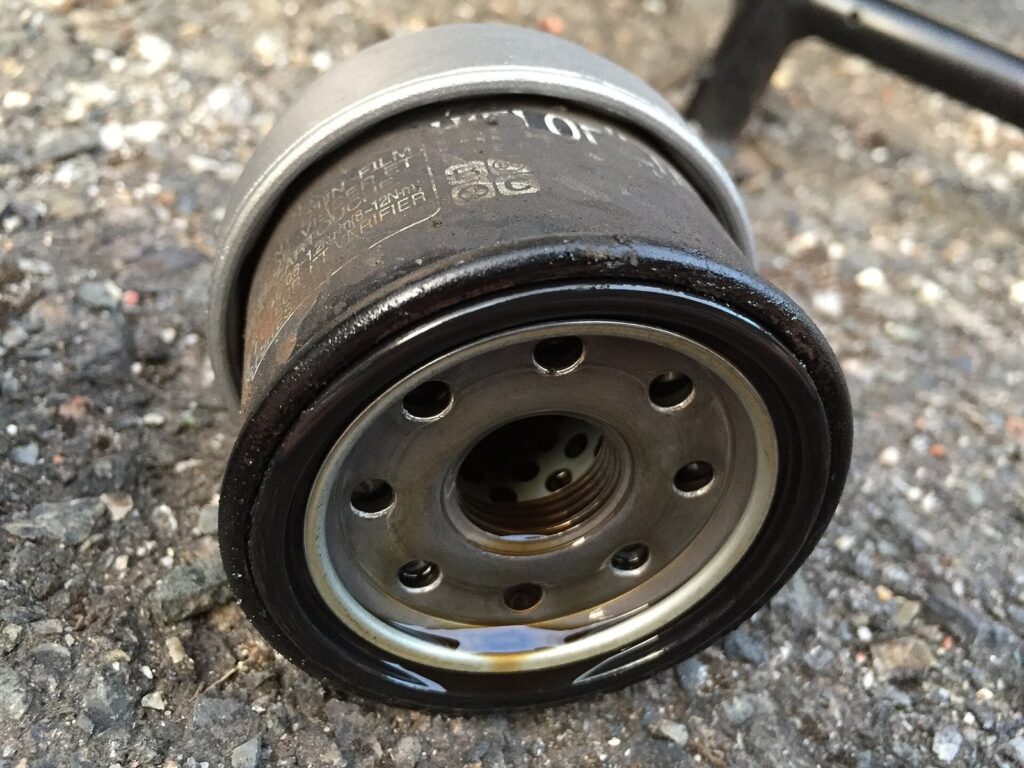
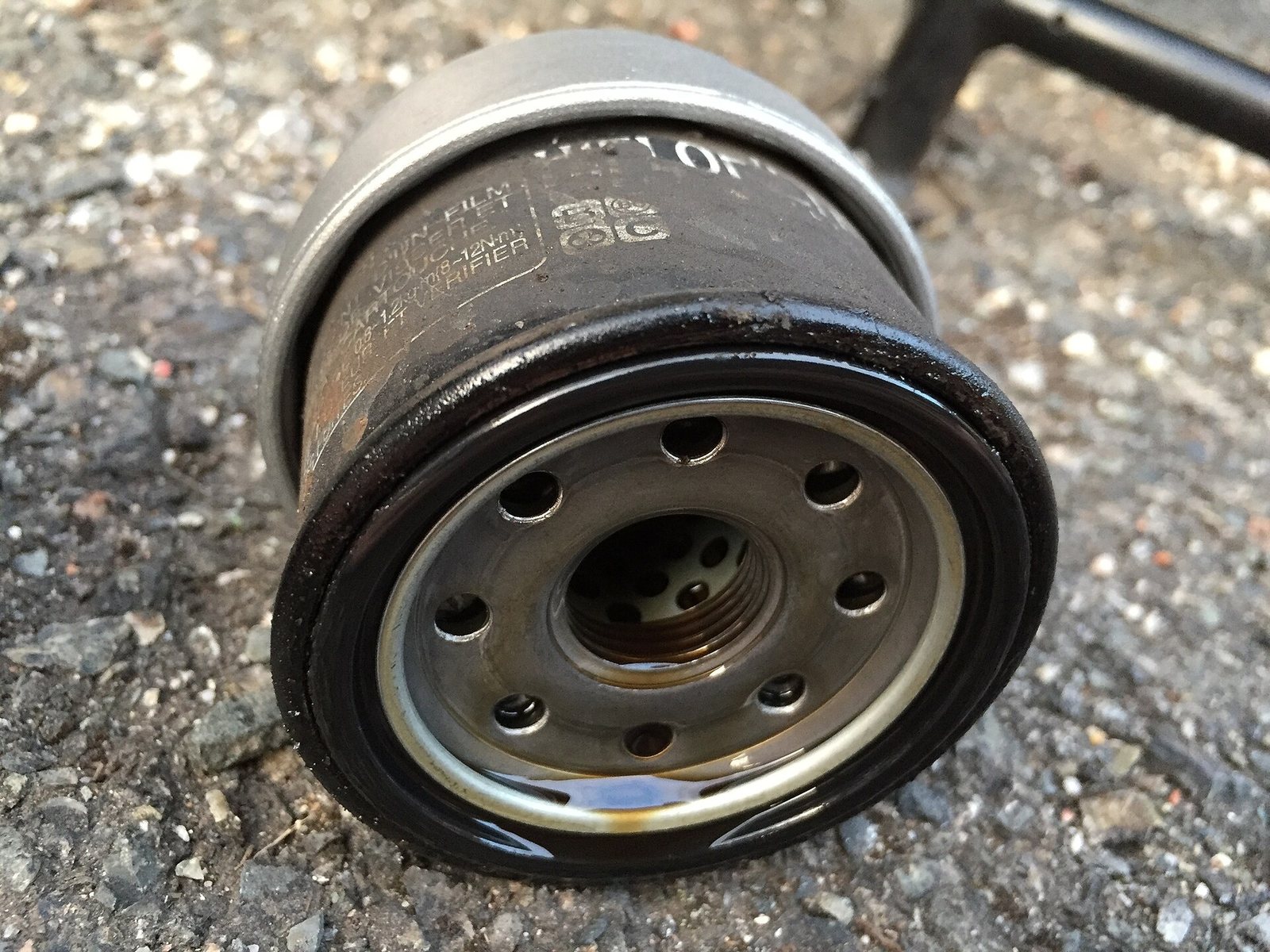
The oil filter sits behind a cover on the right side of the engine, just below where your right foot rests. You'll need your 17mm socket again to remove the three bolts holding the cover.
Once the cover's off, the old filter just pulls straight out. New one pushes straight in. It only fits one way, so you can't mess this up.
Quick reality check: some people skip the filter change every time. I get it—filters cost 80-120 baht. But here's my take: change it every other oil change minimum. Your engine will thank you.
Step 5: Button It Back Up
Reinstall the filter cover with its three bolts. Don't overtighten—snug is good enough.
Thread the drain plug back in by hand first to avoid cross-threading (been there, stripped that, not fun). Then tighten it with your socket wrench. You want it firm, not Hulk-smash tight. About the same force you'd use to tighten a soda bottle cap—just... more manly.
Step 6: The Fresh Stuff Goes In
The ADV 160 takes exactly 0.8 liters of oil after a drain and filter change. That's less than most bikes, which is nice for your wallet.
Remove the oil filler cap (right side of the engine, can't miss it—it literally says "OIL"). Stick your funnel in and pour slowly. I usually do 0.7 liters first, then top off while checking the sight glass.
Checking Your Work (The Part People Skip)
Once you've added oil, don't start the engine yet. Wait 2-3 minutes for the oil to settle, then check the sight glass on the right side of the engine. The oil level should sit between the upper and lower marks. Not above, not below—right in the sweet spot.
Start the engine and let it idle for 30 seconds. You might see the oil light flicker on for a second—totally normal. It's just filling the filter and oil passages.
Shut it off, wait another 2 minutes, and recheck the level. Top off if needed.
What Could Go Wrong? (Honest Talk)
Overfilling: More is not better. Too much oil can cause excess pressure and blow out seals. Stick to 0.8 liters.
Wrong oil type: Using car oil or the wrong viscosity will reduce performance and potentially damage your clutch. In Thailand's heat, 10W-30 or 10W-40 motorcycle oil is your sweet spot.
Stripped drain plug: Cross-threading is permanent. Always start the drain plug by hand, feeling for smooth threads before using tools.
Forgotten drain plug: Yeah, people do this. Always—always—reinstall the drain plug before adding new oil. Ask me how I know.
How Often Should You Really Do This?
Honda officially recommends every 4,000 kilometers or 6 months. In my experience riding around Surat Thani and dealing with dusty roads, heat, and daily commuting? I do mine every 3,000-3,500 kilometers.
If you're doing lots of highway riding in cooler weather, you can probably stretch to 4,000. Lots of city stop-and-go in hot weather? Lean toward 3,000.
Your oil should look honey-colored when fresh and dark brown (not black) when it's time to change. If it's coming out black or smells burnt, you've waited too long.
The Money Math That Matters
DIY oil change: ~350-450 baht per change Shop oil change: ~400-600 baht per change
Doesn't seem like a huge difference, right? But multiply that by 3-4 changes per year over several years of ownership, and you're saving enough for new tires or a weekend trip to Khao Sok.
Plus, you know exactly what oil is going in your bike. Some shops cut corners with cheap oil or "universal" stuff that technically meets specs but isn't ideal.
Real Talk: Should You Actually Do This Yourself?
If you're comfortable with basic tools and following directions, absolutely. This isn't rocket science—it's literally: drain old, add new, check level.
That said, if you're genuinely nervous or don't have a good space to work, there's no shame in paying a shop. But honestly? This is easier than you think. The first time might take you 30 minutes as you figure out where everything is. By your third oil change, you'll bang it out in 15 minutes flat while your coffee's still hot.
When to Call a Professional
Look, I'm all for DIY maintenance, but some things warrant professional eyes:
- Oil coming out with metal shavings (bad news)
- Stripped drain plug threads
- Persistent oil leaks after changing
- Unusual engine noises even with fresh oil
These aren't "YouTube it" situations. These are "find a good mechanic" situations.
Your Next 3,000 Kilometers Start Now
You've got the knowledge, you know the steps, and you understand why this matters. The next time that oil change light clicks on, you won't be hunting for a shop with time in their schedule or worrying about what oil they're actually using.
You'll just grab your supplies, spend 20 minutes in your garage or parking spot, and know your ADV 160 is getting exactly the care it deserves.
And here's the best part? Once you've done your own oil change, you'll start noticing other maintenance tasks that are just as simple. Air filter cleaning, spark plug checks, chain maintenance—suddenly you're not dependent on shops for basic upkeep.
Your bike, your rules, your schedule. That's the ADV 160 ownership experience Honda intended.
Now go get your hands dirty. Your wallet and your bike will both thank you.
Photo credits: “Old motorcycle engine oil filter Hiflo Filtro” — Petrb, CC BY-SA 4.0, Wikimedia Commons