
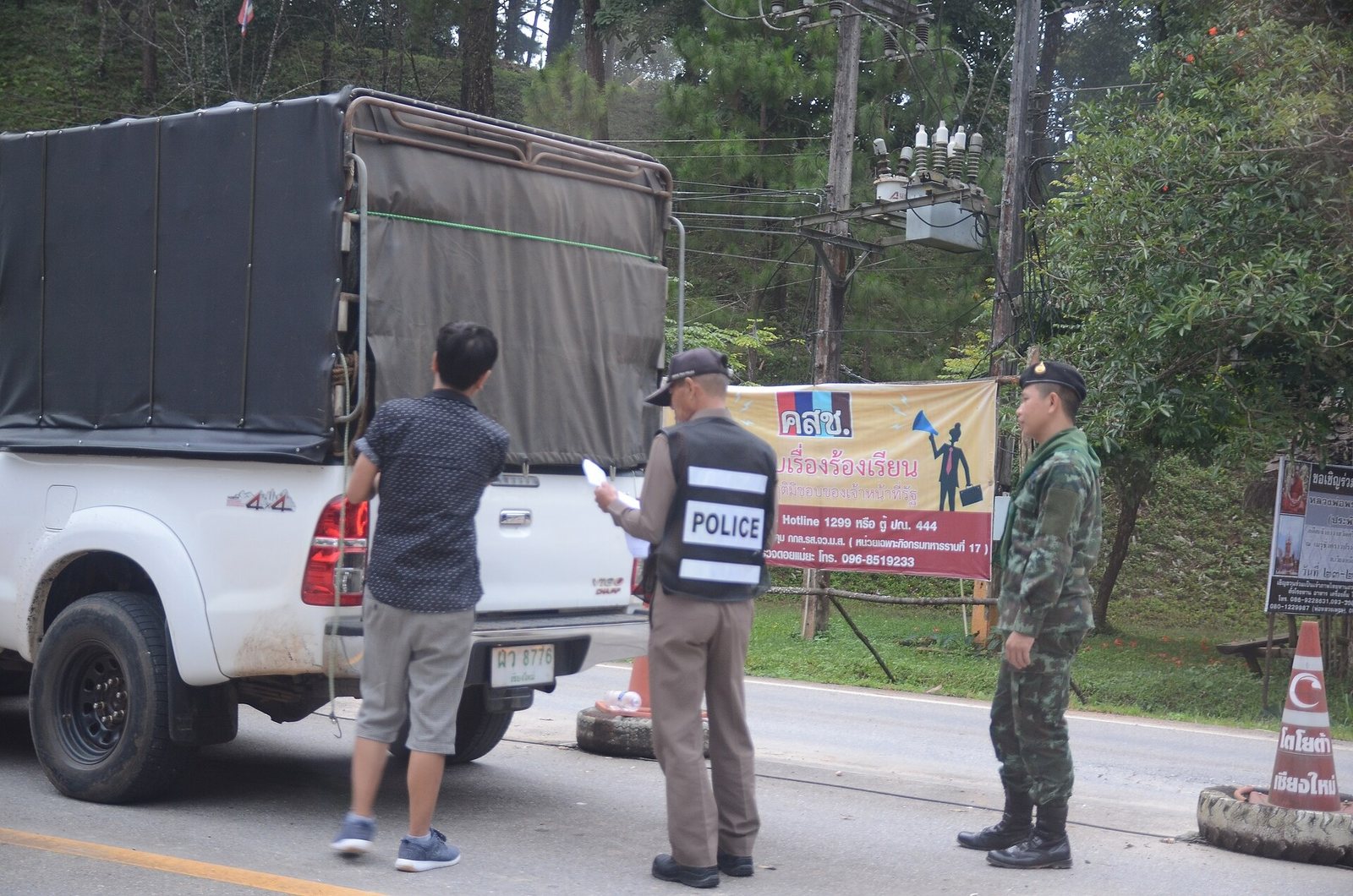
If Thai police stop you while riding a rented scooter in Phuket, slow down, pull safely to the roadside, and turn off the engine. Stay calm and polite, and hand over your passport copy, International Driving Permit (or foreign license with a motorcycle endorsement), and your rental agreement. If you are given a ticket, ask for the official form and pay at the police station, online, or through an authorized payment channel — never hand over unreceipted cash.
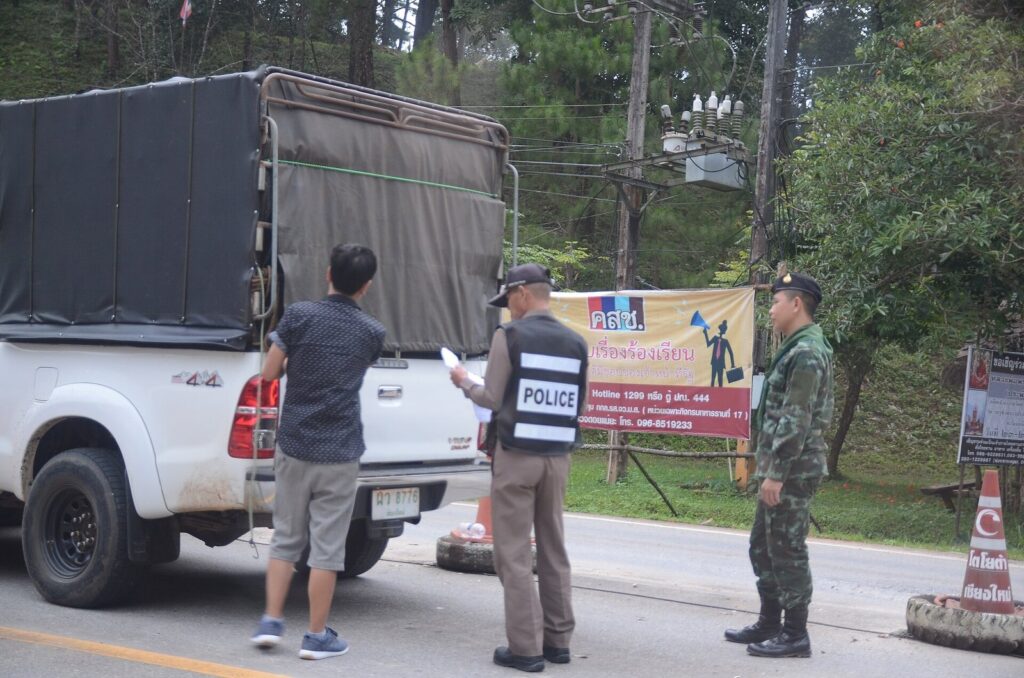
Checkpoints are a normal part of daily life on Phuket's roads, and most stops for tourists are quick, routine document and helmet checks rather than anything to fear. Knowing exactly what to do — and what your rights are — turns a stressful moment into a five-minute formality.
Staying Calm and Pulling Over Safely
Thai police checkpoints are usually staffed by several officers at a fixed roadside point, often with cones, a sign, or a tent. When you see one ahead:
- Slow down early and signal that you are pulling over.
- Stop in a safe spot clear of traffic, ideally where an officer is directing you.
- Turn off the engine, remove your helmet, and keep your hands visible.
- Greet the officer politely (a simple 'sawasdee khrap' for men or 'sawasdee kha' for women goes a long way) and smile.
- Speak slowly and clearly. Many officers at tourist-area checkpoints understand basic English, but patience helps on both sides.
- Never argue, raise your voice, or try to ride away from a checkpoint — this can turn a minor paperwork issue into a criminal matter.
According to a rider guide on handling Thai police stops, the recommended approach is to slow down, pull over calmly, and stay polite and cooperative throughout the interaction — the same etiquette Thai drivers themselves follow (Sabai Motors).
Documents You Must Show at a Checkpoint
Thai law requires you to be able to produce specific documents on request. Keep them somewhere accessible — a slim document pouch under the seat or in your daypack works well.
Driving License and International Driving Permit (IDP)
Foreign visitors are legally required to carry a valid International Driving Permit (IDP) with the motorcycle 'A' category endorsed, alongside their original home-country driver's license. A car-only license or an IDP without the motorcycle category does not satisfy the requirement, even if your home license is printed in English. Apply for your IDP before you leave home through your country's official issuing body, since Thailand does not issue them locally to tourists.
Passport Copy
Carry a photocopy or clear photo of your passport photo page and current visa/entry stamp. Common practice among long-term riders and rental operators in Phuket is to keep the original passport secured at your accommodation and only carry a copy for checkpoints and day-to-day use, reducing the risk and hassle if it is lost or damaged on the road.
Rental Agreement
If you're on a rented scooter, your rental agreement is treated the same as vehicle registration documents for the purposes of a roadside check. It shows the bike is legitimately in your possession and confirms which company is responsible for it. Phuket scooter rental requirements Every scooter and motorbike Chang Thai Rentals hands over comes with a printed rental agreement and insurance details specifically so you have this covered at any checkpoint.
How Fines Work in Thailand
Thailand's traffic fine schedule was significantly increased under an amendment to the Land Traffic Act (Road Traffic Act No. 13, B.E. 2565), which came into force on 5 September 2022 and raised penalties across the board, including for riding without a helmet (Driving in Thailand). Fines were increased again in mid-2025, with several violations now carrying penalties of up to 4,000 baht (Bangkok Post).
On-the-Spot Ticket vs Station Payment
If an officer determines you've committed a violation, the standard procedure is to issue a written ticket rather than collect cash directly. You should accept the ticket calmly — it will tell you where and how to pay, either at the local police station or through an authorized payment channel. Officially, fines can be settled through several routes: at a Krungthai Bank branch, ATM, or mobile app; over the counter at 7-Eleven; via Boonterm kiosks or CenPay points (found in FamilyMart, Big C, and Central stores); at post offices; or online (Motorist Thailand). Always ask for and keep the official receipt as proof the fine was paid and the matter is closed.
Avoiding Informal 'Tea Money' Requests
Thailand's traffic-stop culture has a well-documented informal side: some officers, particularly outside major tourist zones, have historically asked drivers to settle a violation with a smaller unofficial cash payment on the spot instead of a formal ticket, sometimes referred to as 'tea money' (Time). Paying this is not required and is not something you have to agree to. The safest, simplest approach is to politely ask for an official ticket and receipt, or to say you're happy to go to the police station to pay. Genuine officers will not object to this, and it protects you from being overcharged or shaken down. If a request for cash feels aggressive or the situation feels wrong, that's exactly the moment to mention you'd like to call the Tourist Police (see below).
Common Reasons Police Stop Riders in Phuket
Checkpoints in Phuket cluster around known routes and tourist corridors. Reported hotspots include the Patong and Bangla Road area, the road into Chalong and Rawai along Highway 4233, the Phuket Town–airport route on Highway 4030, the hill road between Patong and Karon, and zones around Kamala and Bang Tao. The Darasamut underpass near Wichit has also been flagged as an active checkpoint area (GoGo Phuket). Checkpoints typically focus on:
- Helmet compliance for both rider and passenger.
- Valid driver's license and International Driving Permit.
- Vehicle registration and rental paperwork.
- Signs of intoxication.
- General roadworthiness (lights, mirrors, license plate).
Enforcement is typically heavier around major holidays such as Songkran and New Year, when Thailand runs nationwide road-safety campaigns.
What Happens If You Don't Have a Valid License
Riding without a valid license, or without an IDP that covers motorcycles, is treated as a genuine offense, not a technicality. The fine for driving without a valid license starts at 1,000 baht (Motorist Thailand). Beyond the fine itself, riding unlicensed carries real practical risk: your rental insurance is typically void for any accident that occurs, the vehicle can be detained by police, and your legal footing in any dispute is much weaker. how to get an International Driving Permit It's worth sorting your IDP before you fly, not after you're already at a checkpoint.
Your Rights as a Foreigner at a Thai Checkpoint
As a tourist, you're entitled to be treated the same as any other road user under Thai law. In practice, that means you can reasonably:
- Ask to see the officer's ID or name if you're unsure of their authority.
- Request a written, official ticket rather than paying cash informally.
- Ask to pay at the police station instead of on the roadside.
- Request an English-speaking officer or call the Tourist Police for translation support.
- Contact your embassy or consulate if you're detained or the situation escalates beyond a routine fine.
UK government travel guidance for Thailand points travelers toward the Tourist Police and consular support as the first point of contact when dealing with any difficulty involving local authorities (GOV.UK).
Calling the Tourist Police (1155)
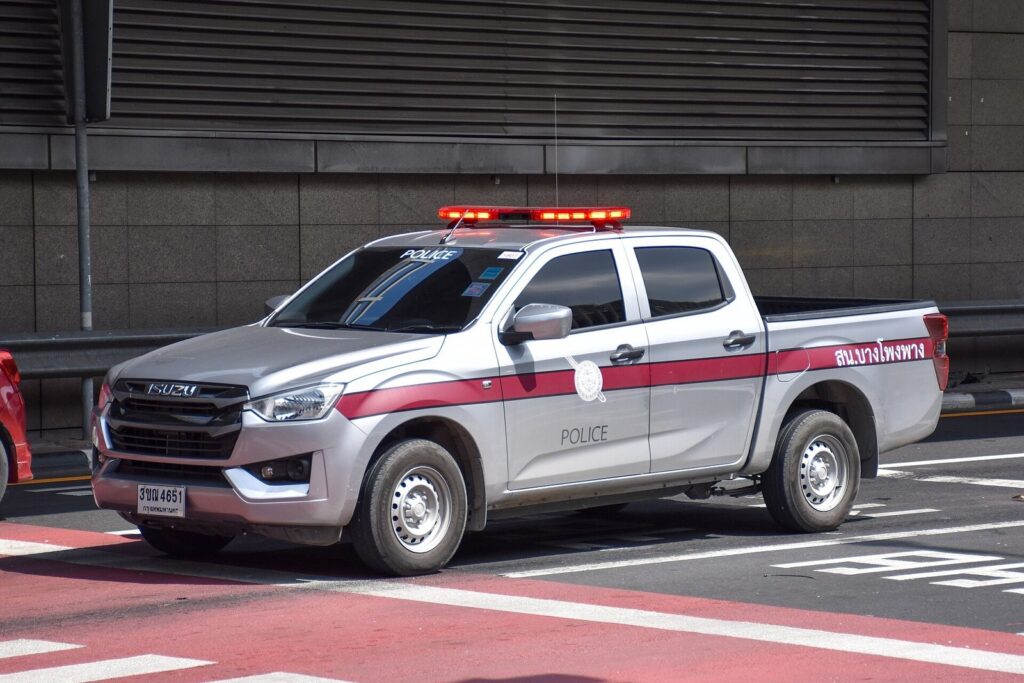
The Tourist Police Bureau, working with the Tourism Authority of Thailand, operates a free 24-hour hotline on 1155 specifically to support foreign visitors, staffed by officers who speak English and other languages (TAT Newsroom; Tourism Authority of Thailand). Call 1155 if:
- There's a serious language barrier and you can't understand what's being asked of you.
- You're asked for an informal cash payment and feel uncomfortable refusing alone.
- You believe you're being treated unfairly or overcharged.
- You need help after an accident, not just a routine stop.
For incidents specifically on highways, the separate Highway Police line is 1193. Save both numbers in your phone before you start riding.
Common Checkpoint Violations and Typical Fines
Fine amounts are set nationally under the Land Traffic Act and its 2022/2025 amendments; local checkpoints may apply figures at the lower end of the legal range. Always ask for the official ticket to confirm the exact amount.
| Violation | Typical Fine (THB) | Source |
|---|---|---|
| No helmet (rider or passenger, each) | Up to 2,000 (up to 4,000 if both unhelmeted) | Motorist Thailand |
| No valid license / no motorcycle-category IDP | From 1,000 | Motorist Thailand |
| Running a red light | Up to 4,000 | Motorist Thailand |
| Driving against traffic / wrong lane | Up to 2,000 | Motorist Thailand |
| Missing documents at a Phuket checkpoint (on the spot) | 500–1,000 | GoGo Phuket |
| Drink driving (first offense) | 5,000–20,000, plus possible license suspension over 6 months and up to 1 year jail | Motorist Thailand |
Frequently Asked Questions
Do I need an International Driving Permit to ride a scooter in Phuket?
Yes. Thai law requires foreign visitors to carry a valid IDP with the motorcycle 'A' category, together with their original home-country license. A car-only IDP or a license alone is not sufficient.
What if I only have my home country's driver's license, no IDP?
You can still be fined and your rental insurance may not cover an accident. Get an IDP with a motorcycle endorsement from your home country's official issuing body before you travel; it cannot be arranged on arrival in Thailand.
Can Thai police legally ask for cash on the spot?
The standard, legitimate process is a written ticket paid later at a police station or through an official payment channel, not a cash handover at the roadside. If you're asked for informal cash, you can politely decline and ask for an official ticket instead.
What happens if I can't produce the rental agreement?
Officers may treat the bike as unregistered to you personally, which can complicate the stop. Always carry the printed agreement Chang Thai Rentals provides with every rental, not just a photo of it.
Is it okay to carry a passport copy instead of the original?
A clear photocopy or photo of your passport photo page and visa stamp is standard practice for day-to-day riding, with the original kept safely at your accommodation. Bring the original if you're asked to visit a police station to resolve something.
Who do I call if a checkpoint stop feels wrong?
Call the Tourist Police hotline on 1155, available 24 hours a day with English-speaking officers who can mediate, translate, or advise on next steps.
Riding Prepared With Chang Thai Rentals
A checkpoint stop should never derail your day in Phuket. Every scooter and motorbike from Chang Thai Rentals — from a Honda Click 125i for zipping around town to a Forza 350 for touring the island — comes with a full rental agreement and the paperwork you need to show at any checkpoint. contact our Phuket rental team Pick up from our branches in Chalong, Mai Khao, Phuket Airport, Bang Tao, or Phuket Old Town, or arrange free delivery to Kata, Karon, Patong, Rawai, and beyond. If you have any questions about documents before you ride, message us anytime on WhatsApp at wa.link/n6a7za.
Sources
- Motorist Thailand — Where can I pay traffic fines? (2025 update)
- Motorist Thailand — Fine for no driver's license (2025 update)
- Motorist Thailand — Traffic Laws You Must Know in 2025
- Motorist Thailand — Penalties for Drunk Driving (2025 Edition)
- Bangkok Post — Traffic fines to increase from Monday
- TAT Newsroom — Tourist Police Thailand: Your First Friend for Safe and Secure Travels
- Tourism Authority of Thailand — 1155 Tourist Police
- GOV.UK — Foreign travel advice: Thailand, Getting help
- GoGo Phuket — Phuket Random Police Checkpoints: Where, When & How to Pass
- Driving in Thailand — The Land Traffic Act
- Sabai Motors — What to do if traffic police stop you in Thailand
- Time — Tourists in Thailand Are Being Targeted by Corrupt Police
Photo credits: “A dubious police check on the way back from Chiang Rai” — shankar s., CC BY 2.0, Wikimedia Commons · “Royal Thai Police, Isuzu D-Max patrol car.” — Manrat Thiusthas, CC BY-SA 4.0, Wikimedia Commons