


Loy Krathong is the night Thais send a small floating offering, a krathong, out onto open water to pay respect to the water spirits, let go of the past year's misfortune, and make a wish. In Phuket, that means candlelit rafts drifting across a lake in the middle of Phuket Town, bobbing in a hotel pool in Patong, or floating out into the Andaman Sea itself. It falls on the evening of the full moon of the twelfth month in the traditional Thai lunar calendar, which is why the date moves around the Gregorian calendar every year and usually lands somewhere in November. Because it's tied to the moon rather than a fixed date, always check the current year's date before you plan your evening — but the places, traditions, and etiquette below stay the same from year to year.
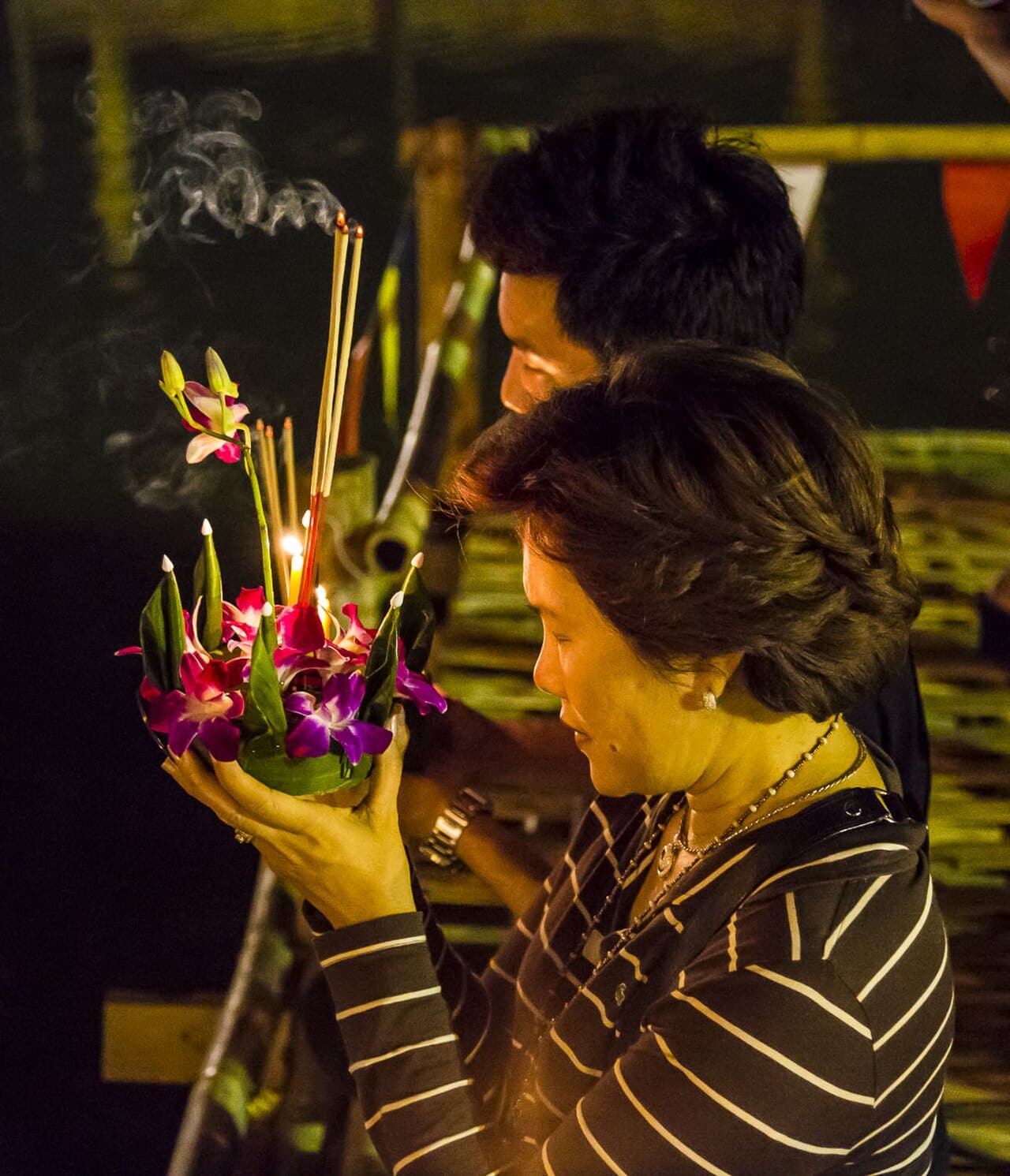
What a Krathong Actually Is
A krathong is traditionally built on a cross-section of banana tree trunk, which floats and biodegrades naturally. Folded banana leaves are pinned around the edge in a lotus-flower pattern, then topped with flowers, incense sticks, and a candle. Some people tuck in a coin or a small lock of hair or fingernail clippings, a symbolic way of setting past troubles adrift with the raft. Once it's lit and set on the water, many people take a moment to press their palms together, make a wish, and let it go. The name itself is literal: "loy" means to float, and "krathong" is the small raft or basket.
The festival's roots are usually traced back to the Sukhothai Kingdom in the 13th to 15th centuries, and Thai folklore credits a royal consort named Nang Noppamas with crafting the first decorative krathong for the king. Most Thai historians note the story comes from a poem that was actually written centuries later, so it's best treated as legend rather than documented history — but it's still why beauty pageants named after Nang Noppamas show up at Loy Krathong events around the country, Phuket included.
Where to Celebrate Loy Krathong in Phuket
Unlike a single-venue festival, Loy Krathong in Phuket happens wherever there's water — the sea, a lake, a temple pond, even hotel swimming pools. A few spots consistently draw the biggest crowds:
Saphan Hin, Phuket Town
Saphan Hin Park, on the waterfront at the southern edge of Phuket Town, is the island's largest and most organized Loy Krathong event. Expect a fun fair, food stalls, live music, traditional dance performances, krathong-making contests, and a Nang Noppamas beauty pageant. The city typically runs a procession that starts near the Provincial Hall on Surin Road and winds through town before arriving at Saphan Hin for the krathong floating in the evening — which means several streets through the old town close to traffic for a few hours after dark.
The Lake by Wat Chalong
Wat Chalong, Phuket's largest and most revered Buddhist temple, has a lake on its grounds that draws a more spiritual, temple-centered crowd. Monks lead ceremonies before the krathong floating, and market stalls and cultural performances fill the temple grounds. It's a quieter, more traditional alternative to the carnival atmosphere at Saphan Hin, and it sits right in the Chalong area — handy if you're staying near there.
Nai Harn Lake, Rawai
In the south of the island, Nai Harn Lake is a favorite with Phuket families rather than tour groups. It's a genuinely scenic spot to watch candlelit krathongs reflected on the water, with a small stage for music and kids' contests, and vendors selling ready-made krathongs right at the lakeside.
Patong, Karon, and Kata Beaches
On the west coast, Patong Beach is the liveliest option — the sand fills with families, food carts, and music as people wade in to float their krathongs straight into the Andaman Sea. Karon effectively has two celebrations in one, with krathongs floated both on the beach and at Karon Lake just behind it. Kata is calmer than Patong but still busy along the shore. Many beachfront hotels in these areas also run their own Loy Krathong evenings for guests, sometimes with krathongs floated in the pool as well as the sea.
Choosing an Eco-Friendly Krathong
Thousands of krathongs go into the water across Phuket in a single evening, and what they're made of matters. Thailand's Pollution Control Department actively discourages styrofoam krathongs — they don't biodegrade, they break apart into plastic fragments, and cleanup crews have reported it taking months to properly clear polluted lakes and ponds afterward. Bread krathongs, once promoted as a wildlife-friendly alternative, have also fallen out of favor: in a crowded pond or lake, large volumes of bread simply rot and foul the water rather than getting eaten.
The recommended choice is still the traditional one: a base of banana tree trunk with banana leaves, flowers, and incense — all of it natural and compostable. Some venues now also offer ice krathongs that simply melt away, and Thai authorities have encouraged a "one krathong per family or couple" approach to cut down the total volume floated each year. If you'd rather not add anything to the water at all, some events now support a symbolic, non-physical way to make your wish — worth asking about at the larger organized venues.
Practical Tips for Visitors
- Buy your krathong on site. Makeshift stalls appear along the streets near every major venue a few hours before sunset, with simple banana-leaf krathongs typically running somewhere around 20 to 100 baht depending on the size and decoration.
- Arrive early. Get to a venue like Saphan Hin or Nai Harn Lake at least an hour before sunset if you want a good spot at the water's edge — the crowds and the krathong stalls both build quickly as the evening goes on.
- Expect road closures near Phuket Town. When there's a procession to Saphan Hin, several streets in the old town close to traffic for the parade route in the early evening. If you're not attending, it's easier to plan your route around the old town rather than through it that night.
- Park early or park outside the center. Parking near the busiest venues fills up well before the krathong floating actually starts, so leave extra time, or park a short walk away and finish the journey on foot.
- Dress and behave respectfully at temple venues. If you're floating a krathong at Wat Chalong or another temple, cover your shoulders and knees and be mindful during any monk-led ceremony before the floating begins.
- Skip anything with metal, nails, or plastic. A krathong should go into the water clean — no staples, pins, or synthetic decorations that won't break down.
Getting Between Venues
Because Loy Krathong in Phuket isn't one single event but a whole island doing the same thing at once, part of the fun is deciding which atmosphere you want — the big organized crowd at Saphan Hin, the temple calm of Wat Chalong, the family scene at Nai Harn, or the beach party at Patong. Public transport between these spots on festival night can be slow once the crowds and road closures set in, so having your own scooter rental in Phuket makes it far easier to island-hop between venues, find parking before it fills up, and head home whenever you're ready rather than waiting on a taxi. Chang Thai Motorbike Rental has branches at Chalong, Mai Khao, Phuket Airport, Bangtao, and Phuket Old Town, so wherever you're staying, picking up a bike beforehand is straightforward — message us on WhatsApp at +66 93 687 1999 if you want to check availability for the festival period.